The Aruba Bar Association, looking back and looking forward.
From its humble beginnings in 1991 to the challenges of today, the Aruba Bar Association continues to evolve with Aruba.
When we talk about institutions that shape the professional and civic life of Aruba, the Aruba Bar Association deserves its place on that list. Its history is relatively recent, but its development reflects the island’s own journey toward greater independence and structure.Beginnings After Status AparteIn 1986, Aruba obtained its Status Aparte, separating from the Netherlands Antilles. That change also meant it was time for the lawyers on the island to organize independently from the Netherlands Antilles Bar Association.It took a few years, but in 1991, the Aruba Bar Association was formed. At the time, it was an informal association. In other words, it was recognized as a body of lawyers, but it did not yet have a legal entity. Perhaps this was due to oversight, or perhaps simply the procedural hurdles of the time. Regardless, from its founding in 1991, the association set out to serve as a professional organization: protecting the interests of lawyers, providing a forum for ethical oversight, and establishing the standards by which colleagues would interact.
A Legal Entity at Last
It wasn’t until 2012 that the Aruba Bar Association formally became a legal entity. The board at the time executed a deed through a civil law notary, making the association official in the eyes of the law. I want to thank my colleagues Rudi Oomen, Eline Lother Homan, Misha Bemer, Eugenia Kok and Antonio Carlo for their leadership and for having signed for this important step. By then, the association had matured. When I joined in 1998, seven years after its informal founding, meetings were still small affairs – sometimes held in rotating law offices, as there were only a handful of firms on the island. There was no professional catering service but always a spouse who would make sure the lawyers had a hearty bite to eat during those meetings. There was no bar service, but rest assured the well-learned gentlemen were not dry during those encounters.Today, with more than a hundred lawyers practicing in Aruba, the association has had to grow more formal and robust.Serving as DekenAround 2014–2015, I was elected President of the Aruba Bar Association (the “Deken”) and served for two years. That role meant more than chairing meetings. It meant acting as a mediator in disputes between lawyers, supporting members in times of difficulty, and representing the profession both internally and externally. It was a demanding but deeply rewarding experience.
The Internet and Email Protocol
One memory that stands out involves something most young lawyers today take for granted: email. While I was Deken, one of the biggest efforts was negotiating an internet and email protocol with the Court of First Instance of Aruab. At the time, lawyers and judges still relied heavily on the fax machine. Moving to email communication required months of meetings – not only between the bar and the magistrates but I also had direct discussions/negotiations with the vice president of the court. At times, it felt as if we were union leaders hammering out an agreement for our respective groups.Today, emailing the Court of First Instance of Aruba feels normal, even obvious. But it’s worth remembering that it was the product of hard work and delicate compromise. That is just one example of how what seems “normal” today was once a major step forward.
The Call for a Dekenberaad
I also recall a speech I gave in 2014, as Deken, at the installation of Judge Engelbrecht. On that occasion, I called for more structured cooperation between the bar associations of Aruba, Curaçao, St. Maarten, and the BES islands. I proposed a Dekenberaad, a council of Dekens, to institutionalize collaboration. My concern then was that too much was left to chance, and too little was being done together, despite the shared challenges across the Caribbean part of the Kingdom.The idea was simple yet ambitious. Out of the Dekens, a chair would be chosen, with the position rotating periodically from island to island. The chair of the Dekenberaad would act as the primary link with the Dutch Bar Association, the Joint Court, and the Hoge Raad. I had discussed with all these institutions and they were all supportive of the idea. In that role, the chair could also serve as a “Deken for the Dekens,” advising and supporting them in complex cases, handling sensitive complaints, or even offering a second opinion when a Deken needed one before taking a position in a disciplinary matter.The Dekenberaad would be funded by contributions from each bar association, and meetings could be held monthly or bimonthly, either in person or through video-conference. The purpose would be to exchange developments, align on oversight, and address shared concerns. As I said then, oversight of the legal profession should be a central theme for the Dekenberaad.Looking back nearly ten years later, I believe the vision still holds. The challenges facing the legal profession in our region are not isolated. By institutionalizing cooperation, we would strengthen our collective ability to safeguard the standards of our profession and the trust of the public.
New Challenges
The legal profession on Aruba faces challenges that were not even on the horizon when the association was founded. Take anti-money laundering (AML) legislation. In the Netherlands, the Dutch Bar Association itself acts as the regulator for lawyers. On Aruba, however, the Central Bank of Aruba is tasked with supervision, something that raises important questions about the role of a professional association versus a regulatory authority.For this reason, over a decade ago, colleagues, together with a professor and a judge from Curaçao, drafted legislation to give the Aruba Bar Association public powers. I was even given the chance to present this draft to the President of Parliament, urging its adoption. Sadly, the proposal has remained flat-lined all this time, but I hear it still has a pulse. The current board, under the leadership of Deken Darin Crouch, is working hard to revive it.
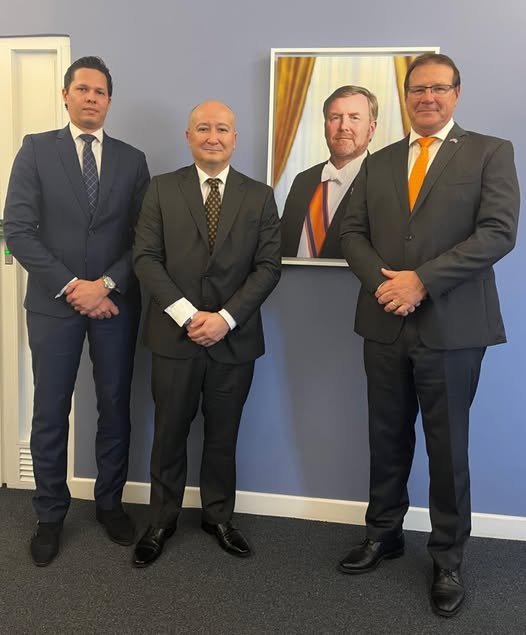
I look forward to contributing to that effort, because having an association with public powers would strengthen both the profession and the public’s trust in it.Returning to the BarLast Friday, I attended the bar meeting alongside my friend and former law partner, Andin Bikker. Both of us had been away from active membership for some time. In my case, after serving two years as Deken, I stepped back and took a much-needed break. Andin, for his part, entered politics, first as a senator and later as Minister of Justice.
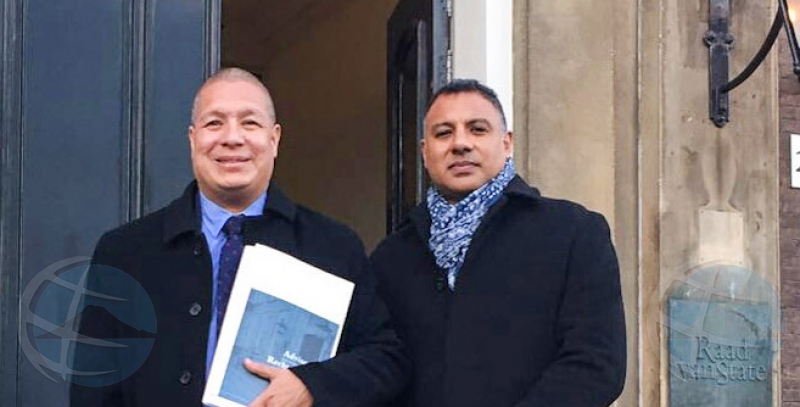
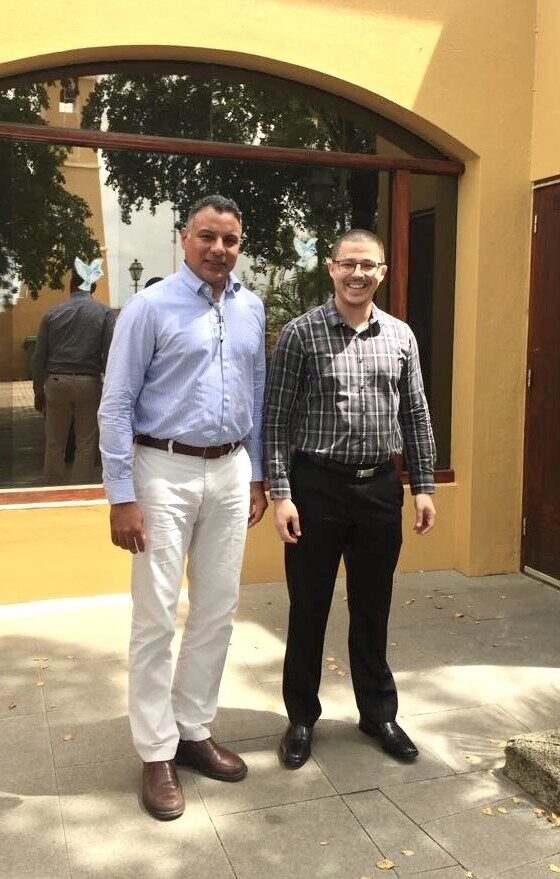
This time my partner Bryan Coffie was one of the members who had to vote for my admittance. Years before it was I that was one of the votes for his admittance.Having observed the work of the new Deken, Darin Crouch, and the renewed activity within the order, we decided it was time to return. Our hope is to contribute with the knowledge and experience we’ve built over the years, and to offer some institutional memory that may help the Bar Association as it continues to face new challenges and opportunities.And in returning, I could not help but remember those colleagues who are no longer among us. We are here today because we stand on their shoulders, because of the foundation they laid, the example they set, the actions they took and the commitment they showed to the profession and to justice on Aruba.
A Resource for the Public
Beyond its internal role, the Aruba Bar Association also serves the public. Its website is an excellent resource, providing a directory of lawyers and outlining the ethical rules that govern the profession. For anyone seeking legal assistance, it’s a natural first stop.A Personal ReflectionWhen I joined the ranks in 1998, I walked into a room filled with dignified colleagues with gray hair. Last Friday, as I rejoined, I realized the tables had turned. Now, I was one of the gray-haired ones.It made me smile. Time has a way of shifting the roles we play. Back then, I was the young lawyer looking up to experienced mentors. Today, I find myself on the other side of that table, hopefully offering the same kind of guidance to those who are just starting out. It’s a humbling reminder of how the profession renews itself, fresh faces arriving with energy and ambition, while those of us with a few more miles behind us contribute experience and perspective.
Looking Ahead
The story of the Aruba Bar Association is, in many ways, the story of Aruba itself: starting small, becoming more formal over time, and facing new complexities as the island grows. For me, rejoining the bar is about more than membership; it’s about supporting the Deken and his board, it’s about giving back to the profession that has given me so much, and helping prepare the next generation of lawyers for the challenges ahead.
Connect with me on LinkedIn
See you next week, and in the meantime, I invite you to visit my website www.lincolngomez.com, where you’ll find all my blogs and podcasts.