Protect Your Creativity, Own Your Future
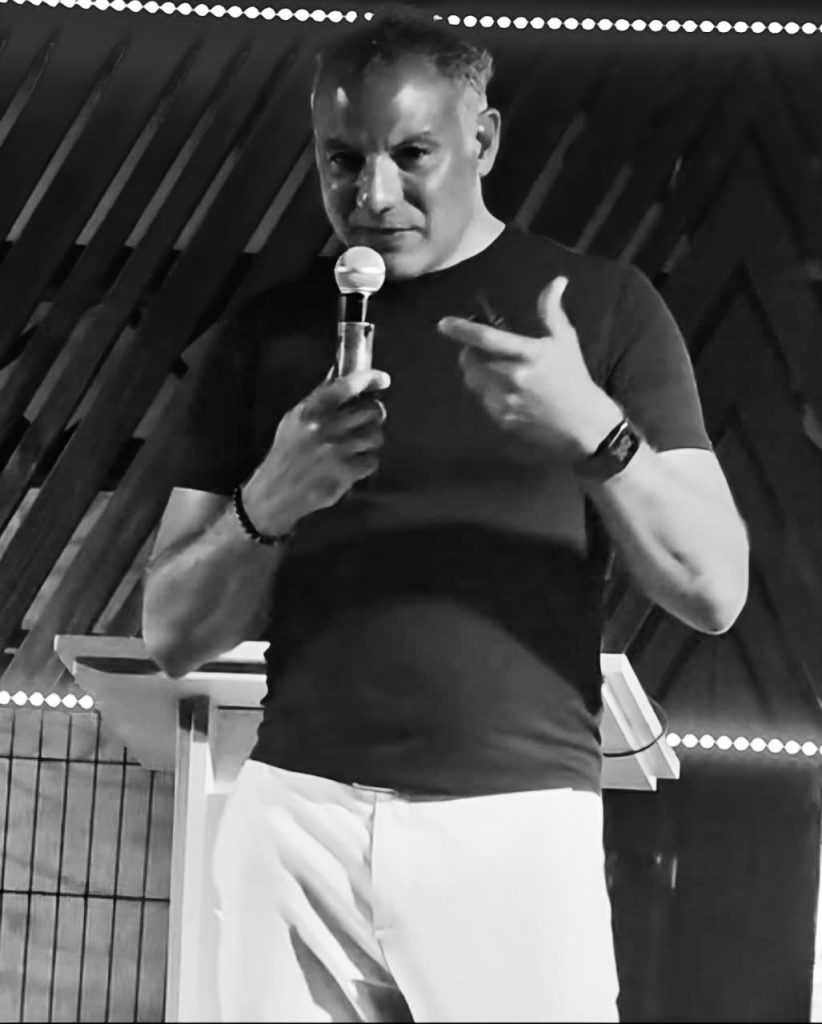
Last week, I had the privilege of serving as the keynote speaker at Rotaract Aruba’s YOU Inc. Seminar 2026 in San Nicolas.
This year’s seminar focused on the Orange Economy, where creativity becomes opportunity, ideas become value, and innovation shapes the future. It was an appropriate and timely theme for Aruba, especially as more young people are building businesses around content creation, technology, design, music, art, entrepreneurship, and other creative industries.
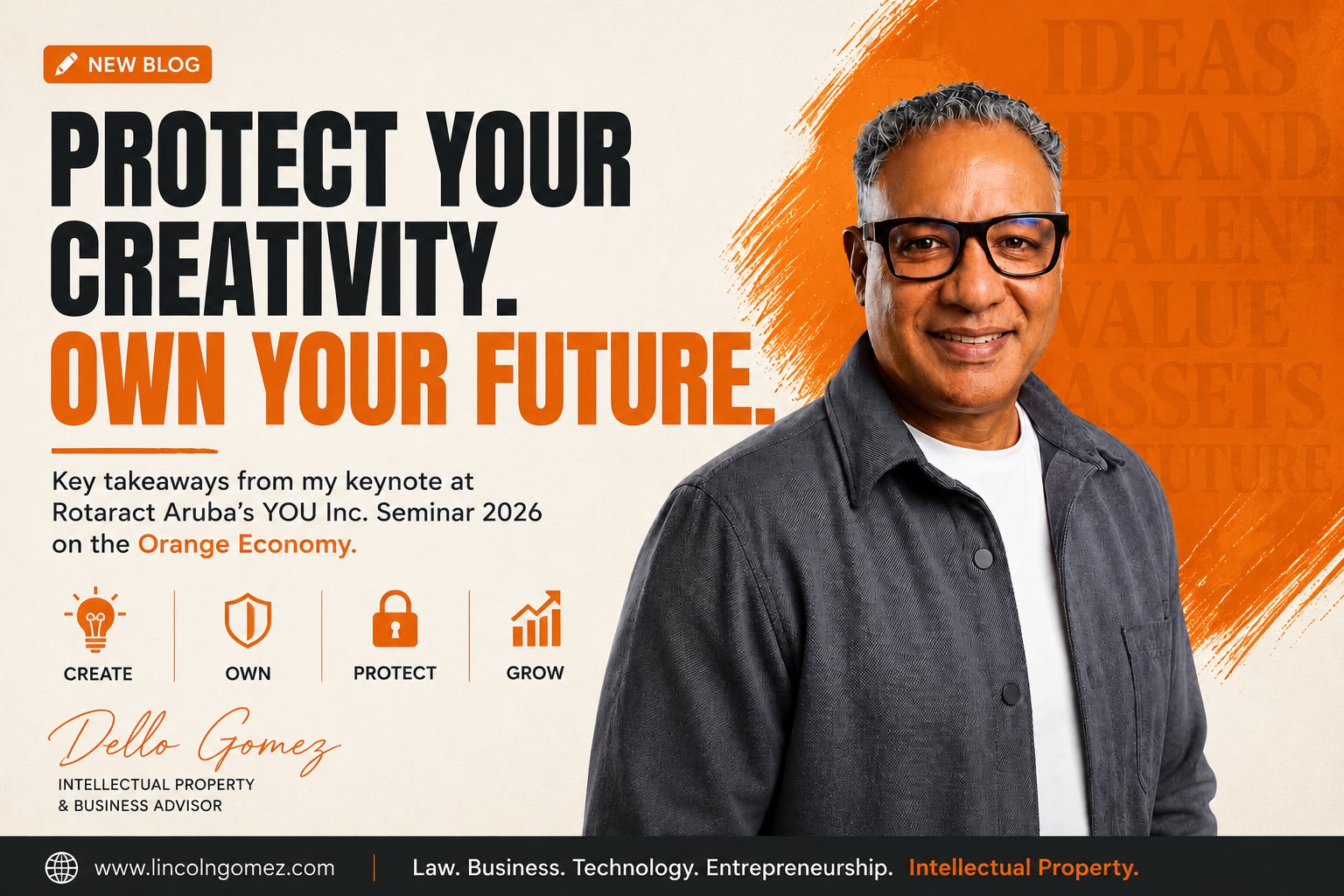
My presentation, titled Protect Your Creativity. Own Your Future., explored the role intellectual property plays in helping creators, innovators, and entrepreneurs transform ideas into valuable assets.
Drawing on more than 30 years of experience in business and law, I shared practical insights, real-life stories, and lessons learned from working with businesses, entrepreneurs, and creators. My goal was simple: help people understand that creativity has value, and that value deserves protection.
The Orange Economy Is Built on Ideas
The Orange Economy is powered by creativity.
Whether you are a musician, designer, photographer, content creator, software developer, writer, artist, or entrepreneur, your most valuable asset is often not a building, a vehicle, equipment, or inventory. It is your intellectual property.
During the presentation, I opened with a simple message.
A song can be worth millions.
One melody. A lifetime of royalties.
A logo can be worth billions.
A swoosh. An apple. A simple mark recognized worldwide.
A painting can be worth millions. In fact, Gustav Klimt’s Portrait of Elisabeth Lederer sold for more than $236 million at auction in 2025, illustrating how creativity can generate value long after the artist has put down the brush.
And a single idea can change a life. Yours, and the lives of everyone it touches. But there is an important catch. Only if you own it.
Too often, creators focus exclusively on creation and forget about ownership. They invest countless hours developing brands, producing content, designing products, and building audiences, only to discover later that someone else is using their work, copying their ideas, or even claiming ownership.
Creativity without protection can become an opportunity lost.
Don’t Just Create. Build.
One of the most important messages I shared with the audience was the need for a mindset shift.
Don’t just create. Build. Creators make work. Entrepreneurs build businesses that own the work. That distinction may sound simple, but it can make all the difference. Without structure, you may own a hustle.
With the right structure, you can build an asset. An asset can be sold, licensed, inherited, financed, expanded, or scaled. A hustle often depends entirely on the person doing the work.
The most successful creators understand this. They do not simply create products, content, or experiences. They build brands, businesses, systems, and intellectual property around what they create.
Lessons From the Front Lines
After more than three decades in business and law, I have seen the same story play out time and time again.
During the keynote, I shared real-world examples involving copyrights, trademarks, trade secrets, contracts, and intellectual property disputes.
Some of those examples came from right here in Aruba.
One involved a business that invested significant time, money, and effort building a brand, only to discover that the artwork at the center of that brand was not properly owned. What started as a creative decision eventually became a business problem. The lesson was simple: don’t build a brand on creativity you don’t own.
Another example demonstrated how something as small as a single letter in a business name can have significant consequences. While many entrepreneurs focus on products and services, trademarks are really about trust, reputation, and the goodwill built over time.
I also shared an example involving confidential business information and customer relationships. In many businesses, the most valuable assets are not physical at all. They are the relationships, knowledge, and information built over the years. Without proper protections in place, those assets can walk out the door and benefit someone else.
Different situations. Different industries.
The same lesson.
Protecting intellectual property is not simply about avoiding disputes. It is about protecting the value you have worked so hard to create.
Creativity Needs Business & Legal Skills
One of the themes that emerged throughout the evening was that many creative professionals still struggle to have their work recognized as having real economic value.
Several of the young entrepreneurs in attendance spoke about the challenge of pricing their work and helping others recognize its value.
Too often, creative work is viewed as a hobby rather than a profession, despite the time, skill, effort, and investment required to produce it.
That is precisely why intellectual property matters.
When creators understand how to own, protect, and monetize their work, creativity stops being “just a hobby” and becomes a business asset capable of generating long-term value.
Talent alone is rarely enough. Creators must also learn about pricing, contracts, branding, ownership, and business strategy.
Success in the Orange Economy requires both creativity and entrepreneurship.
Four Words. One Path.
The framework I shared with the audience was straightforward.
Create. Own. Protect. Grow.
First, create something original and something worth owning.
Second, establish ownership. This becomes especially important when working with partners, employees, freelancers, agencies, investors, or collaborators. Ownership should never be left to assumptions.
Third, protect what you own. Copyrights, trademarks, patents, contracts, licensing agreements, and confidentiality measures can help safeguard valuable assets before problems arise.
Finally, grow. Once protected, intellectual property can be commercialized, licensed, expanded into new markets, attract investment, and create additional revenue streams.
Protection is not about limiting creativity. It is about creating the confidence and security needed to grow.
Three Things to Remember
As I closed the keynote, I left the audience with three simple reminders.
Your creativity has value; never underestimate it.
If it has value, make sure you own it.
Once you own it, protect it with the same determination a lioness protects her cubs, because your future may depend on it.
Everything else flows from those principles.
Aruba has no shortage of talent, creativity, or ambition. The challenge is helping creators transform those talents into sustainable businesses and valuable assets.
Closing
I would like to recognize President Karel K. Arends, project leader Endrick Leon, for organizing an outstanding event.
Rotaract’s mission of developing leadership, professional skills, ethical business practices, and responsible citizenship among young professionals aligns perfectly with the goals of the YOU Inc. Seminar. The quality of the discussions, the audience’s engagement, and the enthusiasm in a fantastic open-air setting demonstrated that Aruba’s next generation of entrepreneurs, creators, and leaders is eager to learn, grow, and contribute.
My sincere thanks to the entire Rotaract Club of Aruba for the invitation, the warm hospitality, and their commitment to investing in Aruba’s future.
Until next week, keep creating, keep building, and remember:
Create. Own. Protect. Grow.
And don’t forget to visit www.lincolngomez.com, where you can find all of my blogs and podcasts on law, business, technology, entrepreneurship, and intellectual property.
See you next week.