HOW A FAMILY TREE BECAME THE STORY OF AN ISLAND
Recently, my son Gavin asked me a simple question.
“Dad, where did our family come from?”
At first, I thought the answer would be relatively easy to find. After all, we live in an age where vast amounts of information are available online. I assumed that a few searches would reveal some names, dates, and perhaps a family tree that would satisfy his curiosity.
I quickly discovered that I was wrong.
What began as a search for family roots has turned into a fascinating journey across Aruba, Venezuela, Colombia, and the Caribbean Sea. Along the way, I have spent hours exploring online archives, chasing historical records, and collecting oral histories from family members and others whose lives intersected with our own family story.
The deeper I dig, the more I realize that this journey is about much more than genealogy.
It is about people.
And two people, in particular, have emerged from the records, memories, and stories that continue to surface.
To our family, they were simply known as Padu and Meme. What follows is not the final chapter of this story, but rather the first of what I suspect will be many discoveries
MEET PADU AND MEME
The earliest ancestor I have identified, so far, is Anna Maria Hieroms. Her descendants would eventually connect Aruba, Colombia, and Venezuela through marriage, migration, and commerce.
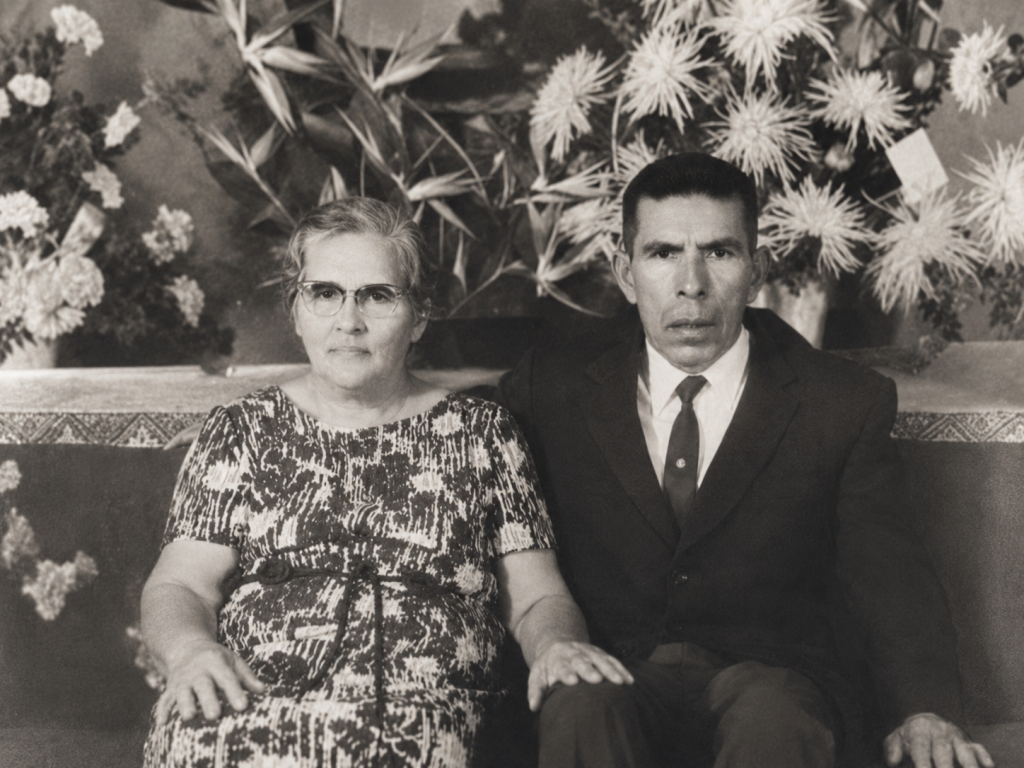
One of those descendants was Maria de los Remedios Hieroms, who married Diego Gomez, a young man born on May 13, 1905, in Adícora, Venezuela.
Others may have known him as Captain Gomez.
Some may have called him Don Diego.
To the family, however, he was simply “Padu.”
His wife, Maria de los Remedios Gomez, was affectionately known as “Meme”. My cousins and I called her “Dudu”, one of those affectionate family titles that once echoed through homes across Aruba
For many years, they lived in Oranjestad at Wilhelminastraat 66. As I continue my research, I am increasingly convinced that their lives represent more than a family story. They were part of a generation whose hard work, sacrifices, and determination contributed to the Aruba we know today.
A MAN OF STEEL
Years ago, at a cigar lounge,e I had an encounter I will never forget.
An elderly gentleman approached me and asked whether I was related to Captain Diego Gomez. When I told him that Delwin Gomez was my father and Diego Gomez was my grandfather, his face immediately lit up.
He introduced himself as Dama Colina, sailor and a former crew member under Captain Gomez, and began sharing stories from many years earlier.
What struck me most was the respect in his voice. He described my grandfather as “a man of steel.” He called him a master sailor.
Then he said something that has remained with me ever since. According to him, Captain Gomez commanded respect and authority simply by entering a room or stepping onto a vessel’s deck. He did not need to raise his voice. He did not need to remind anyone who was in charge. His presence alone was enough.
As I listened, I realized I was hearing more than family folklore. I was hearing the testimony of a man who had worked beside him, sailed beside him, and trusted him with his life.
For me, that conversation transformed my grandfather from a name in family records into a living, breathing person.
THE CAPTAIN WHO CONNECTED THE CARIBBEAN
Today, we travel between islands with relative ease. Airplanes connect us in minutes. Modern cargo ships move goods across the globe. Communication is instantaneous. A century ago, things were very different.
The Caribbean depended on men like Captain Diego Gomez.
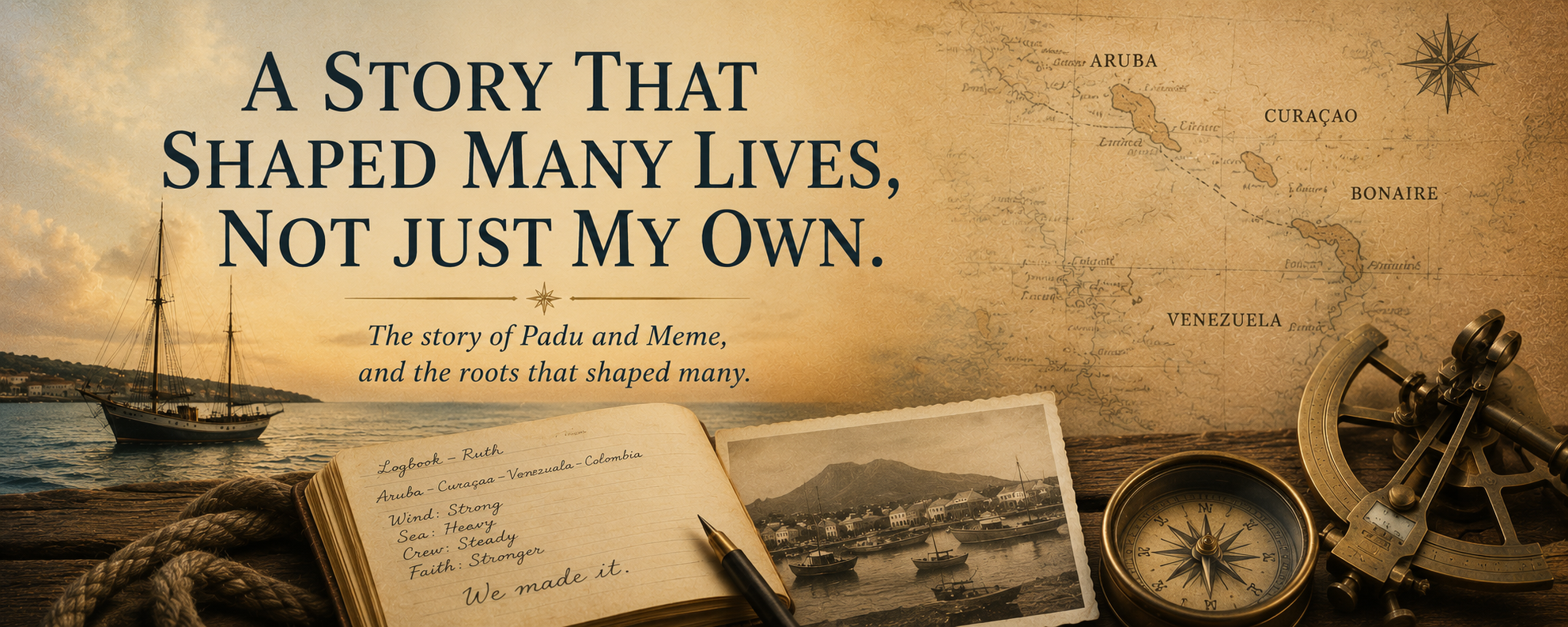
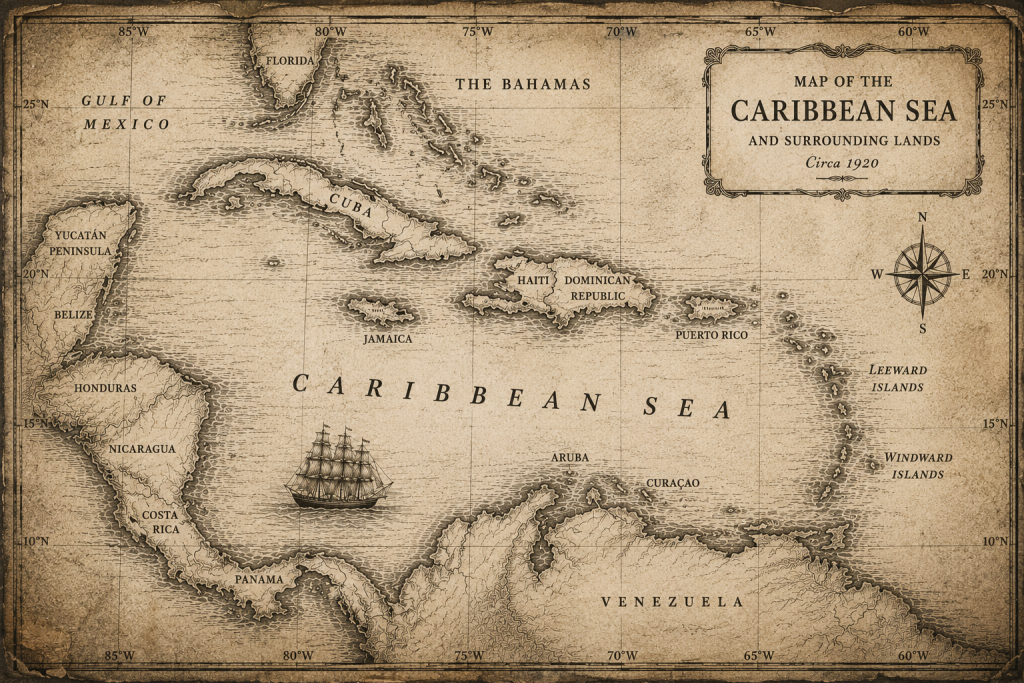
Padu belonged to a generation of mariners who connected Aruba to Curaçao, Venezuela, Colombia, and other Caribbean destinations through skill, courage, and determination. Family members remember vessels associated with him, including the “Ruth”, as well as the “Trinidad” and the “Endeavor”. Those vessels transported goods throughout the region, helping connect islands and coastal communities long before modern transportation networks existed.
Many of the vessels that sailed these waters during that era were built in Bonaire, which had earned a reputation throughout the Caribbean for its skilled shipbuilders and sturdy wooden sailing vessels. My dad tells me that at least two of these vessels were built there as well, making them part of a proud maritime tradition linking Bonaire, Aruba, Curaçao, Venezuela, and Colombia. My dad recalls that the “Endeavour” was painted black.
Yet cargo was only part of what they carried.
According to family stories, Captain Gomez often provided passage to individuals and families seeking a better future in Aruba. Many came from coastal communities in Venezuela and Colombia. Commercial transportation was expensive and often unavailable, making cargo vessels one of the few options available to ordinary people.
Those passengers arrived carrying more than personal belongings. They carried dreams, ambitions, and hopes for a better future. Many would eventually establish businesses, raise families, and become part of the fabric of Aruban society.
In a very real sense, Captain Gomez transported more than cargo.
He transported opportunity.
Life at Sea
The sea could be both friend and enemy.
Family tradition recounts a voyage during World War II in which my grandfather’s vessel was intercepted by a German submarine on its return from Cartagena, Colombia. According to the story, German sailors boarded the vessel, confiscated supplies and cargo, and questioned the crew. They chose not to sink the ship, allowing the captain and crew to continue their journey, and everyone returned safely to Aruba.
Another remarkable story came from a former crew member named Dama Colina.
Years after the voyage, Dama recognized me as “a Gomez”. He asked whose grandson I was. When I told him, his face lit up. He lit a cigar with the grandson of his former captain, and he shared a memory he had never forgotten. Captain Gomez and his crew had traveled to Puerto Rico to pick up a shipment of cement when port authorities warned that a hurricane was approaching and advised ships not to leave.
Captain Gomez disagreed. He insisted on the cargo being loaded onto the vessel and an immediate departure – before the hurricane hit. He was going back home.
Before departure, he ordered every crew member to tie himself securely to his assigned position aboard the vessel.
Then they sailed.
Dama later admitted that he was terrified. He believed they might never survive the journey. Every crew member remained tied to his assigned station as the vessel battled the heavy seas. Yet under Captain Gomez’s command, they successfully navigated the storm with hurricane winds filling up the sails and returned safely to Aruba.
What Dama said next left a lasting impression on me.
According to him, no sailing vessel had ever crossed that stretch of sea faster. Whether that was literally true or simply the admiration of a sailor recalling an extraordinary voyage, there was no mistaking the respect in his voice. Dama was convinced that he had witnessed something remarkable.
Stories like these help explain why so many people remembered him with such admiration and respect.
WAITING FOR THE CAPTAIN
Of all the stories I have heard so far, the ones that touch me most are not the dramatic tales of storms and submarines. They are the stories about family.
My father and his brother Efrain, both because they were deemed old enough and were boys, often accompanied their father to the harbor before a voyage. They walked hand-in-hand from the house to the Paardenbaai (Horses Bay) aka “Waf Chikito”. They sat and watched him prepare the vessel, complete his final checks, and eventually sail away.
Then came the waiting.
When his expected return date approached, they returned to the harbor and watched the horizon. If the ship had not arrived, they waited longer. Eventually, they would ask the harbor master or port authorities whether any news had been received.
Every maritime family understood the risks.
Storms happened.
An equipment breakdown happened.
War happened.
There was also a belief shared by many families whose livelihoods depended on the sea. A delayed ship was often good news. Bad news traveled fast.
Those simple words capture the uncertainty that so many Aruban families once lived with whenever a loved one sailed beyond the horizon.
MEME: THE ENTREPRENEUR BEHIND THE CAPTAIN
As much as I have become fascinated by my grandfather’s life, I have become equally fascinated by my grandmother’s.
If Padu represented the adventurous spirit of the Caribbean mariner, Meme represented the resilience, discipline, and determination that held everything together at home.
Today, we would probably describe her as an entrepreneur. At the same time, she was raising ten children, feeding them and also kids from other families daily, managing a busy household, and supporting a husband whose work often took him away for extended periods.
While raising a household that often included around 15 people, she also operated a home-based business. She was known for her pastries, especially her “pan dushi”, which she sold to merchants, workers, and residents on the streets surrounding Wilhelminastraat and nearby Nassaustraat, then known as Caya Grandi and today as Caya G. F. Betico Croes.
I know this because I worked for her.
At least, that is how I viewed it as a child.
Whenever we visited, the grandchildren became part of Meme’s delivery operation. Because I was one of the younger grandchildren, my territory was limited. I was only allowed to make deliveries along Wilhelminastraat. Leaving the street was strictly forbidden. The older cousins received larger territories and more responsibility.
My compensation package was simple.
For my efforts, I received a slice of fresh “pan dushi” and a cold soft drink from “La Gran Bodega”, the general store located directly across the street from the house.
At the time, I considered this an excellent arrangement.
Today, I realize those deliveries gave me something far more valuable than wages.
They gave me memories.
When my grandfather passed away in the mid 1970s, Meme continued on for nearly three more decades before leaving us at the age of ninety-four. Like so many women of her generation, she made an enormous contribution, even if it was not always visible to the outside world.
Padu may have sailed the ships.
But Meme helped keep the entire enterprise afloat.
MORE THAN NAMES AND DATES
As this research continues, I have come to appreciate that genealogy is not really about discovering names and dates.
Those are important because they provide the framework.
But stories are what bring those names to life.
What began as Gavin’s question has become something much larger. It has become a search for the people behind the records and an effort to preserve their stories before they are lost to time.
The journey is far from over. We have hired historians, and they continue their work. Archive specialists continue their search. Family members from both the Gomez and Hieroms branches continue to share memories and information. New connections continue to emerge in the most unexpected places.
One day, when this work is complete, I hope to hand Gavin more than a family tree. I hope to hand him the stories.
The story of Padu, the captain who helped connect the Caribbean.
The story of Meme, whose kitchen became a small enterprise and whose home became the center of a family.
The story of ordinary people who lived extraordinary lives.
Because names tell us where we came from.
Stories tell us who we are.
Thank you for reading. Happy sailing, and I look forward to seeing you again next week. In the meantime, I invite you to visit my website at www.lincolngomez.com, where you can find all my blogs and podcasts.