When Escalation Becomes Fatal: A Decision, A Line Drawn, A Standard Set
A few weeks ago, I wrote about a moment that escalated beyond reason.
A broken taillight. A decision to flee. More than twenty shots. A life lost.
At the time, the court had not yet spoken.
Now it has.
And that matters more than it may seem.
Not only because a judgment was delivered.
But because of what that judgment says.
About the law. About accountability. About us.
What Happened After
Since that previous column, the court issued its decision in both cases.
The judgments are public. They are detailed. They are reasoned.
I have read them. You can also here and here.
And before opinions harden and positions become fixed, there is value in understanding what the court actually did.
Because this was never just about emotion.
It was about facts. Evidence. Law.
And ultimately, responsibility.
What the Case Was Really About
There is something important the public should understand from the outset. This was not a case where the evidence was seriously disputed.
The prosecution took a clear position.
There was, in their view, legal and convincing evidence that one officer was guilty as an accessory to murder.
The defense did not counter that with an evidence-based argument.
They did not challenge the foundation. They reframed the justification.
They argued that the officers acted within their duty.
That force was permitted.
They argued self-defense.
That there was an immediate threat. That there was no way out.
And finally, they argued that even if boundaries were crossed, the situation overwhelmed them to such a degree that it should excuse their actions.
These are recognized legal routes.But they are fundamentally different from saying,
“This did not happen.”
What the Court Examined
The court approached the case methodically.
It reconstructed the incident in detail.
It examined forensic evidence.
It reviewed the defendants’ statements.
It also reviewed video footage.
That matters.
Because it meant the court was not relying solely on recollection.
It had a record. And from that record, it reached a conclusion that would define the case.
The vehicle entered a dead-end street.
It reversed. The officers exited their vehicle.
Weapons were drawn almost immediately.
Shots were fired at close range.
Toward the front of the car. Through the windshield. Along the driver’s side.
More than twenty times.
The court did not look only at how many shots were fired.
It looked at where they were aimed. Where they struck.
And from that, it found no indications pointing away from intent.
No contraindications.
And more than that, the court found that the officers acted together.
Consciously. In coordination.
A joint action.
The Question of Threat
The defense centered its case on fear.
They said they feared for their lives.
The court tested that claim against the evidence.
Against the video.
Against the positioning.
Against the movement of the vehicle.
And it rejected it.
The court concluded that the driver was attempting to escape.
Not to attack. It found no immediate danger that justified deadly force.
That distinction is everything.
It is the line between lawful force and unlawful violence.
The court also referred to the European Convention on Human Rights.
Deadly force cannot be considered necessary when it is known that a person poses no threat to life and is not suspected of a violent offense.
At the same time, the court acknowledged that officers may act on an honest belief of danger, even if that belief later turns out to be mistaken.
But here, that belief was not supported by the facts.
The Defenses, Considered and Rejected
Each of the defense arguments was examined.
Acting within duty.
Self-defense.
Excessive self-defense due to emotional pressure.
Each was tested. Each was rejected.
The court found that the force used was neither necessary nor proportionate.
That there was no legal justification.
And that matters.
Because it directly addresses a narrative that has circulated publicly.
That this was unfortunate, but justified.
The court has now said clearly: it was not.
The Role of the Prosecution
There has been criticism directed at the prosecution.
Some of it strong.
But it is important to be precise.
The prosecution did not argue that this was justified.
They did not support the use of force.
On the contrary, they concluded that the officers acted beyond what the law allows.
They rejected the same defenses the court rejected.
Where the difference arose was not in guilt.
It was in sentencing.
That distinction matters.
Because if we are to have confidence in the system, criticism must be informed.
The Court’s Voice
Then comes a part of the judgment that deserves attention beyond the legal findings.
The court began with the reality of the case.
This is a tragedy.
A young man lost his life.
A family carries that loss.
A child grows up without a father.
The court acknowledged the pain.
It acknowledged that no sentence can undo what has been done.
That matters. Because justice is not only about rules. It is about recognizing consequences.
I have written before about the role of empathy within the courtroom, and how rarely it is openly visible. This judgment is another example worth reflecting on, as discussed in The Power of Empathy in the Court of First Instance of Aruba.
What Is a Just Sentence?
The court then asked the central question.
What is a just sentence?
Not an easy question.
A just sentence must reflect the seriousness of what happened.
It must take into account the circumstances of the defendants.
It must consider the impact on society.
It must balance.
The court recognized that the defendants are human.
That they will carry this for the rest of their lives.
It considered their personal circumstances.
Their lack of prior convictions.
The impact already felt.
But it did not allow those factors to outweigh the core fact.
A life was taken.
Without justification.
Drawing the Line
In my previous column, When Escalation Becomes Fatal , I questioned whether the level of accountability being proposed reflected the seriousness of the facts as they appeared at the time.
The prosecution proposed a conditional sentence.
No prison time.
The court did not follow that path.
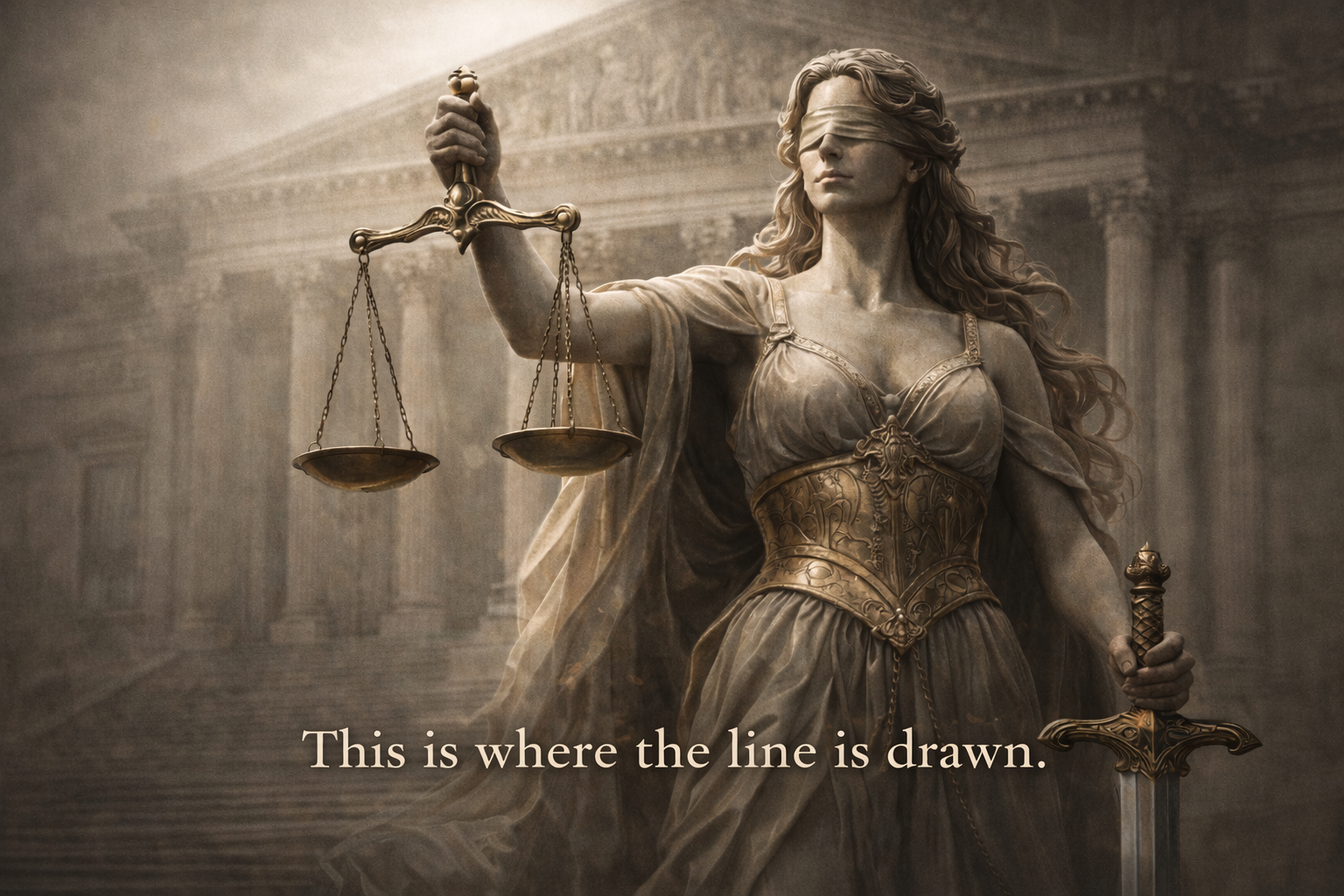
It stated clearly that the seriousness of the facts required an unconditional prison sentence. That is not a technical difference. It is a line in the sand. The officers were sentenced to three years, with a portion of the sentence conditional.
Police officers are not above the law. That is no longer a statement. It is a judgment.
What This Means for the Community
So where does this leave us? It leaves us with a decision that is both legal and symbolic. Legally, it establishes accountability. Symbolically, it sends a message.
That standards matter. That when those standards are breached, there are consequences. This does not undo what happened. It does not erase the loss. But it does something essential.
It shows that the system is capable of drawing a line. And that matters more than we sometimes realize.
What Comes Next
The defendants have the right to appeal. They should exercise that right.
That is part of a functioning legal system. But for now, this is where we stand.With a judgment. With reasoning. With accountability. And perhaps, with a measure of clarity.
Closing
In my previous column, I asked what we tell our children. That question still stands. But today, the answer is firmer. We tell them that authority carries responsibility.
That the law applies to everyone. That when lines are crossed, it matters. And we can also say this.
That the court listened. That it weighed. That it decided.
For that, the court deserves recognition. Not because it was perfect.
But because it did what it is meant to do when it matters most. It drew the line.
I’ll see you next week.
In the meantime, visit my new website at www.lincolngomez.com/blog to find all my blog posts and podcasts.
Woof..