Not So Fast!!
What a 1.4 Million-Florin Tax Settlement Reveals About Oversight, Privilege, and Unfair Advantage
When institutions fail publicly, it makes headlines. But when they fail quietly – when the guardrails are there, but no one hits the brakes – it’s more dangerous.
Aruba’s Public Prosecutor (OM) recently announced that R.J.H., the businessman behind Fast Delivery Services, has agreed to a settlement of 1.4 million florins to resolve serious tax fraud charges. These included failing to report dividend and working income between 2017 and 2022 – offenses under Aruba’s General National Tax Regulation (ALB). That, by itself, is serious. But the bigger story is what the case exposes around it.
The Cash, the Case, the Silence
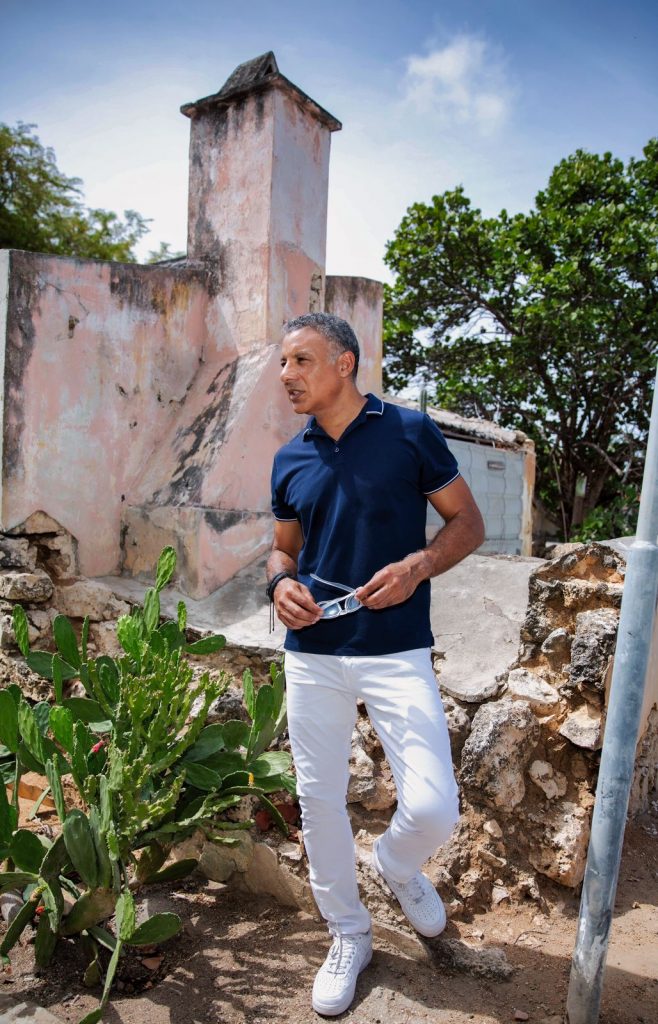
According to the OM, R.J.H. had more than a million florin in cash on-site when his logistics and courier business was raided—as part of an unrelated corruption investigation. The final transaction, however, addressed only the tax violations. A photo circulated in local media shows R.J.H. flanked by his legal team, seemingly after accepting the deal.
He walks away without a trial – good for him or any other suspect – perfectly according to the law. Prudence would dictate a settlement rather than risk a criminal trial. The Public Prosecutor’s Office stated that this transaction was considered the most appropriate way to conclude the criminal case, taking into account that fiscal offenses are, in principle, suited to a financial sanction.
By entering into a settlement, the case could be resolved more quickly and efficiently, which, according to the OM, serves the interest of both the country, the tax authority, and the suspect.
But the country is left with a deeper question:
How does someone accumulate over one million florin in cash – undetected – in a structurally supervised economy like ours?
A million florin, physically held in cash, is the kind of figure that’s supposed to raise every red flag – across banks, accountants, and tax authorities. Aruba has robust anti-money laundering (AML) regulations. Commercial banks apply risk-based due diligence under the Central Bank’s supervision. There are threshold reporting duties for unusual transactions and cash volumes.
So why didn’t anyone notice?
- Did the bank monitor deposit patterns or flag cash-heavy activity?
- Were there false declarations, or simply no questions asked?
- Did the auditor ever query liquidity or reconcile income reports?
- Were customs declarations manipulated or incomplete?
Because in a jurisdiction with this level of oversight, you don’t just end up with a million Florin in cash by accident. And if someone can – without alarm bells, inquiry, or accountability until years later – we should all be asking: What else is going undetected?
Who Else Was Involved?
One person signed the settlement. But one person doesn’t hide millions in income, keep over a million florin in cash, and run a cross-border logistics operation under the radar – alone.
- Who knew?
- Who helped structure payments?
- Who signed off on the financials?
- Which professionals or institutions handled the money and didn’t ask questions?
If not a trial, will there be disciplinary reviews, regulatory inquiries, or at least a public audit trail of who else enabled this?
Because when misconduct is this large, and this prolonged, someone else always knew. The only question is whether we care enough to look.
Who Benefited?
Misconduct doesn’t occur in a vacuum. Hidden income funds operations. It finances expansions. It rewards insiders.
- Who was paid off the books?
- Were there subcontractors or insiders with irregular compensation?
- Did any affiliated entities or family members receive distributions?
- Were any public or political figures supported or shielded?
If there’s no attempt to trace the financial trail, then the message is clear:
Settle the tax case, and everyone else keeps their share.
Unfair Play
Tax fraud doesn’t just hurt the treasury. It distorts competition.
When one operator avoids obligations, they:
- Cut prices
- Expand faster
- Underbid law-abiding competitors
This isn’t just a legal issue. It’s an economic one. And it puts pressure on everyone who chooses to follow the rules.
Privilege and Trust: The Bonded Warehouse Question
Fast Delivery operates in the freight and cargo sector – a sector often reliant on bonded warehouses. These facilities allow goods to be stored duty-free, under the assumption that customs declarations will be accurate and revenue obligations honored when due. Bonded warehouse status is a privilege, not a right. It’s based on regulatory trust.
With the operator now convicted of tax fraud, the Ministry of Finance and Customs (Departamento di Duana) face a clear test:
- Will bonded status be revoked, suspended, or audited?
- Will enhanced guarantees or oversight be imposed?
- Or will this quietly continue, despite a major breach of confidence?
If that privilege survives this outcome, the state is effectively saying: Integrity isn’t a condition. It’s a formality.
Integrity in the Air: What Will Freight Partners Do?
Fast Delivery’s own website highlights affiliations with major commercial airlines and international cargo carriers. These relationships allow the company to offer rapid solutions for perishables, hazardous materials, and time-sensitive freight.
But now those global brands face their own decisions:
- Do they review the partnership in light of the settlement?
- Do their compliance policies apply equally in Aruba?
- Have their legal teams even been notified?
Because reputational risk travels faster than cargo, and for airlines and carriers who market trust and reliability, silence in the face of fraud may be a price they can’t afford.
Now What?
The OM considers the matter resolved. But for Aruba’s institutions – banks, customs, regulators, aviation authorities, trade partners – this is just the beginning.
- Will the bank continue to do business with him and the company as usual?
- Will the Directorate of Civil Aviation revisit the company’s Air Operator Certificate (AOC)?
- Will UPS or other international commercial airlines clarify where they stand?
If nothing happens, then we’ve answered the most important question of all:
What are the consequences of financial misconduct? Apparently, only what you negotiate.
Not So Fast
This case may be administratively closed. But the public consequences are not.
“Not so fast” isn’t just a reference to the company name. It’s a warning. A reminder that integrity isn’t optional, and silence isn’t neutral.
Because the question is no longer what one businessman did.
It’s what everyone else does next.
Subscribe to my newsletter on LinkedIn for weekly columns on governance, compliance, and corporate responsibility. Follow me or add me as a connection on LinkedIn to stay in the loop. Or just message me at – I’d love to hear your thoughts
You can find all previous columns and my podcast at www.lincolngomez.com.
Thanks for reading – I’ll see you next week.
This column is based on publicly available information and reflects the author’s opinion on matters of public interest and governance. It is not intended to make factual allegations about any individual beyond what has been reported by official or public sources.