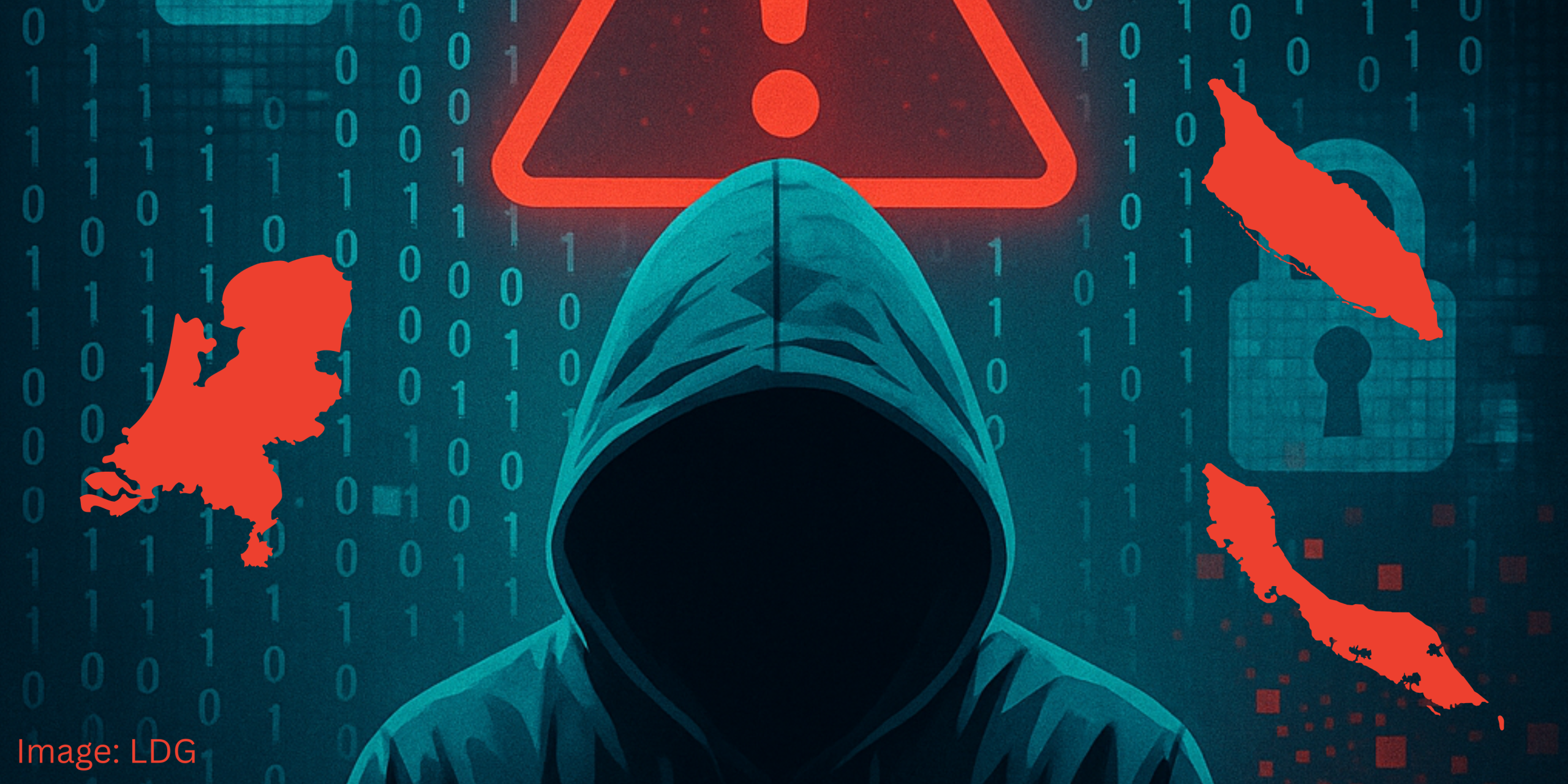
Cyber Trouble in our Dutch Kingdom
I just landed at home sweet home. Quite a bit of airtime this past week and while all of that was going on, cyber security? Front and center this week across the Dutch Kingdom.
First, the South-Eastern Netherlands prosecution office, reportedly hacked. The Court of First Instance of Aruba ground to a halt for over a week due to what was described as a technical issue. Whether it was a cyberattack or a generic ICT breakdown, it certainly looked suspicious. The Court seemingly went into a mothball mode and operations were disturbed despite valiant efforts I am sure from all involved. Sort of a deja vu moment, a reminder of when Lady Justice had to use her veil as a mask instead of covering her eyes. In those days even the court house was closed
And then Parliament of Aruba got hit.
Now, to be honest, that might be the least damaging of the bunch. No offense, but I’ve yet to see anything of strategic value leaking out of there lately.
But it didn’t stop there. The Tax Department of Curaçao was recently breached. And we all remember when Dr. Horacio Oduber Hospital in Aruba was hacked, an incident that disrupted healthcare operations and forced a partial shutdown. When hospitals and public institutions are vulnerable, it’s clear these threats are not theoretical.
My Own Little Cyber War
As if that wasn’t enough, my own blog, www.LincolnGomez.co yes, this one, got hacked.
I got tipped off via my website host. Someone had inserted a product listing into the site in such a way that I couldn’t see it, but apparently others could. Subtle, clever, and just annoying enough to disrupt things without me noticing. Nevertheless loaded with malicious intent.
Fortunately, I’ve got my people. My host Dwayne tried first , experienced, reliable, but when it got tricky, I called in the big gun, Riangelo: my go to guy, my software engineer, security expert, and digital Swiss Army knife. He took it on as a personal challenge, and within two hours, the site was clean, restored, and fortified.
Otherwise it would have taken him one hour or less. The attackers were good. Just not good enough.
Thanks to my cyber security ninjas, I didn’t have to erase the entire site, and all my past writing, which would’ve been the nuclear option.
What These Attacks Actually Look Like
Cyberattacks aren’t one-size-fits-all. Some are loud: ransomware that locks up entire systems and demands Bitcoin. Others are silent: backdoors, hidden scripts, hidden bits, redirects, things you don’t even see until it’s too late.
The patterns are familiar. Someone finds a crack in the system and walks right in, sometimes for money, sometimes for access, and sometimes just to cause chaos.
And most people? They don’t even know it happened. To my local readers, word of advice: have your website and ICT-infrastructure audited. Or find an ethical hacker and challenge him to breach your system, if he or she can do it, chances are others can too. It is best if you find any vulnerabilities sooner rather than later.
Digital Locks for Digital Doors
What I’ve learned, personally, is that every system has vulnerabilities. Some are the result of sloppy code. Others are deliberately planted and left dormant until activated. And more often than not, you won’t even know you’ve been compromised.
Until someone else tells you.
Cyber Awareness 101
There are some good local initiatives on cybersecurity, like the but let’s be honest, they’re not enough.
In corporate environments, we run phishing drills, attend training sessions, and review protocols. Because we know cybersecurity isn’t just an IT issue, it’s an issue that involves the whole team and more importantly it’s a human issue.
And whether you run a real estate company, a law firm, a supermarket, or a personal blog, a few simple habits make a big difference:
- Don’t click on that sketchy-looking email. Just don’t.
- Keep your website in check. If someone builds you a site for cheap, it might come loaded with outdated plugins, poorly written code, or security gaps they don’t even know about. On the flip side, just because someone charges you a premium doesn’t mean they’re offering premium work, they could be outsourcing it to low-cost providers, using flashy templates, and slapping a price tag on the design without ensuring the backend is secure. Ask how it’s built, who built it, and what’s under the hood.
- Ask questions. Who has the hosting? Who has access? Who has worked on the code? Are the plug-ins secure? Who audits the code?
- Assume that if you’re not actively managing your digital security, someone else might be, for their benefit, not yours.
AI and the “Experts”
And while we’re here, a quick word on AI.
These days, everyone calls themselves an AI expert. But there’s a world of difference between using AI and understanding AI. Buying a chatbot package and tweaking it and offering it for sale, isn’t the same as understanding how language models work, how data is processed, or how that data might be stored, reused, or leaked.
So yes, trust, but verify. Or better yet: try and verify.
I’m all in favor of AI. I’ve written about it before. But if you’re new to it, be cautious. And when seeking help, make sure you’re dealing with someone who actually knows what’s under the hood, not just someone who knows just a little bit more than you but pretends to be a wizard.
A Digicel Business Note
Full disclosure: through my ongoing work for Digicel, I’ve had a front-row seat to how seriously cybersecurity is being treated at the enterprise level,not just as a technical add-on, but as a core pillar of digital transformation.
Digicel operates within the Digicel Group ecosystem, a company that has evolved far beyond its telecom roots. Digicel today is a full-fledged digital operator with a presence in over 30 markets across the Caribbean and Central America. And when we say “business solutions,” we don’t mean just mobile plans and cloud storage, we mean building secure, resilient, future-ready infrastructure. Ask our Mark Shoebridge.
Just recently, Digicel took another major step forward by announcing a strategic alliance with Symptai, one of the region’s most respected cybersecurity consulting firms. Digicel’s Liam Donnely and Marlon Cooper from Symptai were front and center announcing this alliance. Teh value is in the team behind them – our human capital.This partnership brings advanced capabilities in penetration testing, risk auditing, governance, and AI compliance to businesses across the region. It’s a big deal, because it closes the gap between global-grade digital threats and local access to world-class protection. At Digicel, we’re already integrating those capabilities into how we support clients. Whether it’s internal security posture assessments, system audits, or client-facing solutions, our cybersecurity approach is now both regionally grounded and globally backed.
This isn’t a trend or a branding exercise. This is a real investment in keeping systems, and people, safe. It’s a core part of the work.
Final Click
We wouldn’t leave our front doors at home or work unlocked. But many of us leave our digital doors wide open, because we assume no one’s looking.
They are.
So take five minutes this week. Update your passwords. Enable two-factor authentication. Review your site. And if something feels off, don’t ignore it.
Stay safe, stay smart, and I’ll see you next week, hopefully from a secure connection.
Until then, all my columns and podcasts are (still) at www.lincolngomez.com