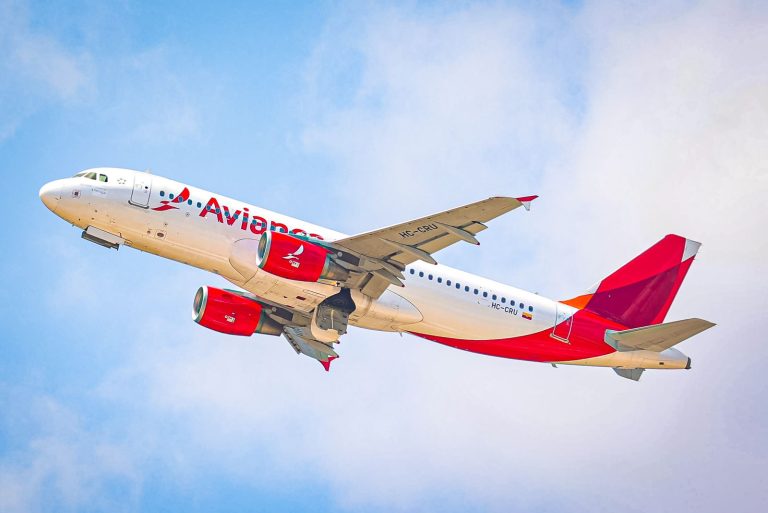
ABC Routes: The Bridge We’ve Lost – and How to Build It Back
For decades, the connection between Aruba, Bonaire, and Curaçao was more than just a short hop. It was a lifeline, a steady flow of people, ideas, business, and culture that made the ABC islands feel like different rooms in the same home. Whether for a business meeting, a weekend getaway, or an urgent family matter, you could count on a flight being there.
But since around 2012, the numbers tell a sobering story. Tourism registrations show a decline of nearly 50% in visitors traveling from Curaçao and Bonaire to Aruba. And let’s be clear, this does not include locals who travel for leisure, work, or to maintain family bonds. Those journeys still happen, though increasingly they are marked by frustration, cancelled plans, and missed opportunities.
This decline isn’t about a lack of interest. People still want to travel between our islands. People need to travel between our islands. The problem is, too often, they simply can’t.
When We Had More Carriers, and More Choice
Not so long ago, we had not only larger capacity aircraft on these routes, but also more airlines competing for passengers. Perhaps the larger planes weren’t ideally suited for the short ABC hops, but when combined with multiple carriers, they provided us with more options, increased frequency, and greater flexibility.
When I began my career, my firm had offices in both Aruba and Curaçao, and part of my job involved frequent travel between them. Getting there was usually – but certainly not always – fine, unless the flight was cancelled, which happened often enough to keep you uneasy.
The return trip was the real gamble. I’d be at the airport with accountants, tax lawyers, and other businesspeople, all clutching boarding passes for both airlines in the hope that at least one would take off. Sometimes neither did. We’d end up booking a hotel for the night and trying again the next day. Even today, when I am hired to do work in Curacao, the first caveat I make is that I may not be able to make it across if and when needed, certainly not on a spur-of-the-moment or for instance for an injunction. Nowadays, my court appearances in Curacao are mostly via video-conferencing either from my office, hotel room or lastly even from the back of a taxi in a busy metropolitan city.
Before Status Apartheid: Seamless Official Travel
Before the Status Apartheid, the skies between the islands were even busier. Government officials working for the Netherlands Antilles were stationed on one of the islands and frequently flew to carry out their duties across the other islands. Deputies, ministers, parliament members, and council members could move seamlessly between islands to attend meetings, oversee projects, and coordinate policy.
That ease of movement has faded over the years. With it has come an erosion of efficiency that is less visible but no less real. The inability to travel easily between islands doesn’t just delay projects; it also slows decision-making, disrupts cooperation, and quietly erodes economic productivity. I haven’t done the exercise of quantifying it, but there’s no doubt the cost is significant and we are paying it.
Airlines That Came and Went
We’ve seen familiar names take to the skies and then vanish: Air Aruba, Insel Air, Tiara Air, Avia Air, ALM, all once active, all now gone. Was there a common denominator in their decline? Did they all overlook something essential?
This isn’t unique to the ABCs. Across the Caribbean, similar stories have played out, airlines launching with promise, only to disappear a few years later. The reasons vary, but the result is the same: reduced connectivity, higher fares, and growing frustration for travelers.
Perhaps the problem wasn’t only competition or economics, but a lack of laser focus. Imagine an airline with a single mission: to serve the ABC route, and to do it right. The right aircraft for short hops.. The proper schedules to make day trips possible. The right infrastructure to ensure smooth operations. And the right team committed to reliability over risky expansion.
Such a carrier wouldn’t need to chase long-haul routes or spread itself thin. It could simply be the dependable bridge between our islands, something we once had, and something we urgently need again.
The Golden Ticket Era
Today, the problem is different but just as limiting. We primarily rely on smaller-capacity aircraft, which means fewer seats and less flexibility. A colleague in Curaçao recently told me he books a month in advance, describing getting tickets for flights between the islands as being the same as getting “the golden buzzer” on America’s Got Talent.
There’s also a factor that most people never hear about: some insurers do not certify the current aircraft and operational setups at the level required for certain types of coverage. This means that certain executives, high-net-worth individuals, and other insured travelers are simply not allowed to use them, because if something happened, their insurance wouldn’t cover it. That’s another invisible but very real barrier to inter-island travel.
In the past few weeks alone, I’ve had meetings cancelled simply because no flights were available. And when you step back, this isn’t only about a missed meeting or a funeral, it’s about cutting off the flow of commerce, tourism, and culture between islands that should be closely connected.
The Economics of Isolation
The economic impact is real. When businesses can’t depend on frequent, affordable flights, they hesitate to expand into neighboring islands. Sales calls are delayed. Opportunities vanish.
Tourism suffers too. A visitor in Aruba might want to spend a day in Curaçao exploring its historic streets, or in Bonaire enjoying world-class diving. A diver in Bonaire might like to hop to Aruba for beaches, shopping, or nightlife. Multi-island itineraries would add value for visitors and revenue for all three islands. But right now, they’re close to impossible.
And then there are the absurd scenarios: U.S. business travelers flying from Miami to Aruba, then back to Miami, and then onward to Curaçao, all just to meet with partners. It’s inefficient, costly, and avoidable. The cost is high, and we, the consumers, pay the price.
We Do It With Miami. Why Not With Curaçao?
Here’s the frustrating part: we already know how to do this right. I used to leave Aruba in the morning, fly to Miami, attend meetings, and be home in time for dinner, reliably, without a single missed connection. The same applies to some other routes: you can depart early, spend the day, and return the same evening or the next morning.
Of course, Holland is farther, you can’t make that trip in a single day, but those flights are still reliable and frequent. If we can deliver that kind of dependable service to destinations thousands of kilometers away, why can’t we do the same for our neighbors just over the horizon?
A Call for One Direction
This is not just a concern of the private sector. Governments, civil aviation authorities, airport authorities, and tourism boards of all three islands need to align. We need the right policies, the right infrastructure, and the right mindset to make inter-island travel frequent, affordable, and dependable again.
The ABCs should be a seamless “one-two-three”, not a logistical puzzle that turns away visitors and frustrates businesses. The demand is here. The benefits are obvious. Now it’s time to make it happen.
See you next week, and until then, may your connections be smooth and your landings soft, and visit www.lincolngomez.com for all my blogs and podcasts.