When the Rules Finally Catch Up
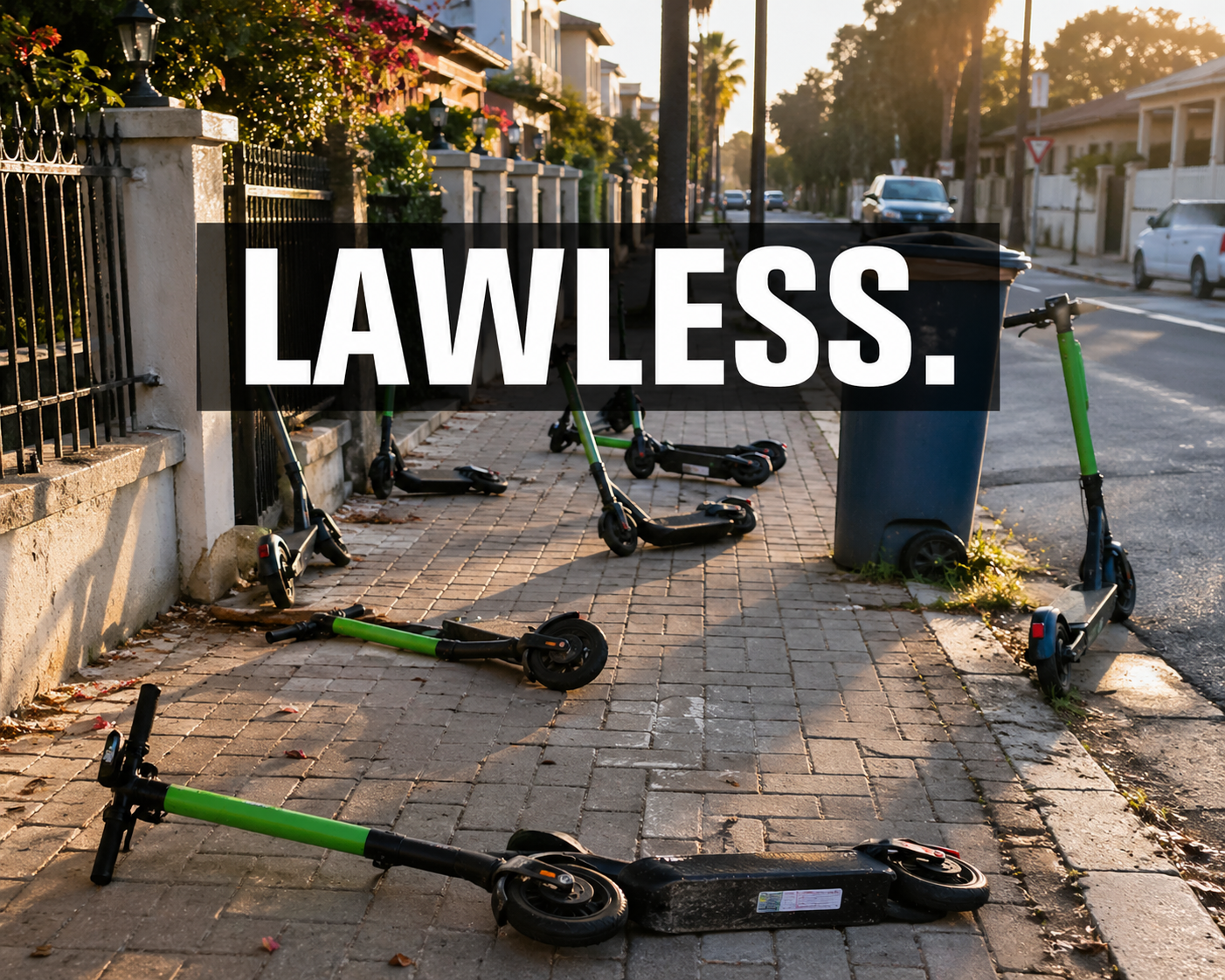
We have all seen them, scattered around left, right, and center. On the streets, across sidewalks, even in front of people’s homes. Those of us who walk or jog early in the morning know it especially well: having to stay alert, watching every step, making sure we don’t trip and fall over one of these things. It felt lawless. It looked fearless. And for a long time, it went unchecked.
What began as convenience quietly turned into a public safety issue hiding in plain sight. So yes, kudos are in order. The announcement by the Minister of Justice, Arthur Dowers, finally says what needed to be said: enough is enough.
Clarity at Last
The message is no longer vague. Motorized steps are illegal on public roads. They are not to be parked on sidewalks. They cannot be rented out without proper authorization. And businesses operating in this space must meet the same standards as any other transport provider, including permits, inspections, and licensing. This is not a new law. This is the law being enforced.
It Was Never Just About Convenience
This was never a debate about innovation versus regulation. It was about accountability. We allowed a parallel transport system to grow without the basic rules that govern everything else on our roads. That imbalance was always going to catch up with us.
The “It Was Allowed Before” Argument
Now comes the pushback: it was happening for years, so how can it suddenly stop?
Because in law, non-enforcement does not equal permission. Courts, including the Council of State, have been consistent on this. If something is illegal, it remains illegal. whether it was enforced yesterday or not. No rights are created simply because authorities did not act.
No Rights from Silence
There is a concept called legitimate expectation, but it has a high threshold. It requires a clear and concrete promise from a competent authority. That never happened here. There was no formal policy, no published framework, no authorization. What existed was a gap. And gaps can be closed.
Ignorance Is Not a Defense
There is also a basic legal principle that now becomes unavoidable: ignorance of the law is no excuse. People may have relied on what they saw around them, but that doesn’t change the legal reality. Now that the reset button has been pressed and the rules have been made explicit, the expectation is simple: comply. The “I am getting away with this laugh”….is suddenly gone.
When Citizens Trigger Enforcement
There is another layer here that deserves attention. In Dutch and Aruban administrative law, a citizen can file a verzoek tot handhaving, a formal request to have the law enforced. This is not a casual complaint. It is a legal trigger.
Once such a request is filed, the competent authority, the toezichthouder, cannot simply ignore it. They are required to assess the situation and, in principle, act if a violation exists. Only in very limited circumstances can they refuse, and even then, that refusal must be properly justified.
In other words, enforcement is no longer optional once it is formally invoked. As a citizen, I hereby submit this request and am glad to follow up with a formal request to the competent authority. That matters because it places a legal obligation on the authorities to move from passive observation to active enforcement. Seen in that light, the Minister’s announcement does not stand alone; it aligns with and reinforces a process already set in motion. It is not just policy. It is a legal follow-through.
Risk Was Always Part of the Business
The same applies, more sharply, to those who built businesses around this. Operating without permits, without a legal framework, without approval, that was a choice. And it was a risky one. Just like any illicit operation, it carries consequences when enforcement arrives. You get shut down. You absorb the losses. You bring your business into compliance if you want to continue. But let’s be direct, because this is where the conversation shifts.
These operators knew, or should have known, they had no license. If they invested without a proper legal due diligence, that is on them. And if they didn’t, ignorance of the law is no excuse. That principle applies even more to those running a commercial operation. So before we hear complaints about losses, there are some basic questions that deserve answers:
Where did the money go? The “swipe and go” model may look sleek on the surface, but was that revenue flowing into a properly registered local business account? Were taxes being paid, BBO, profit tax, reporting obligations? Or was it structured so as to bypass local oversight altogether?
Because if you operated outside the legal framework, you don’t just face regulatory consequences, you raise fiscal ones as well. Before arguing hardship, demonstrate compliance.
And one thing should be clear: employees are not the problem. They followed instructions. Responsibility sits squarely with the operators who choose to run outside the law. They carry the consequences and the obligation to deal fairly with their employees.
Enforcement Is the Real Test
Announcements are easy. Enforcement is what matters. Confiscations, shutdowns, accountability, this is where credibility is built or lost. Because the issue was never the absence of rules. It was the absence of follow-through.
A Necessary Reset
This is not about being anti-scooter. It is about restoring order. Rules only matter when they are applied consistently. What we are seeing now is a long-overdue reset.
The Bottom Line
Silence is not approval. Non-enforcement is not permission. Ignorance is not a defense. And operating outside the law is always a risk.
What we are seeing now is not a change in direction. It is accountability catching up.
Until next week, stay sharp, stay informed, don’t endanger traffic and keep asking the right questions.
And don’t forget, you can find all my latest blogs and podcasts at www.lincolngomez.com.