Proportionality, or the Lack of It
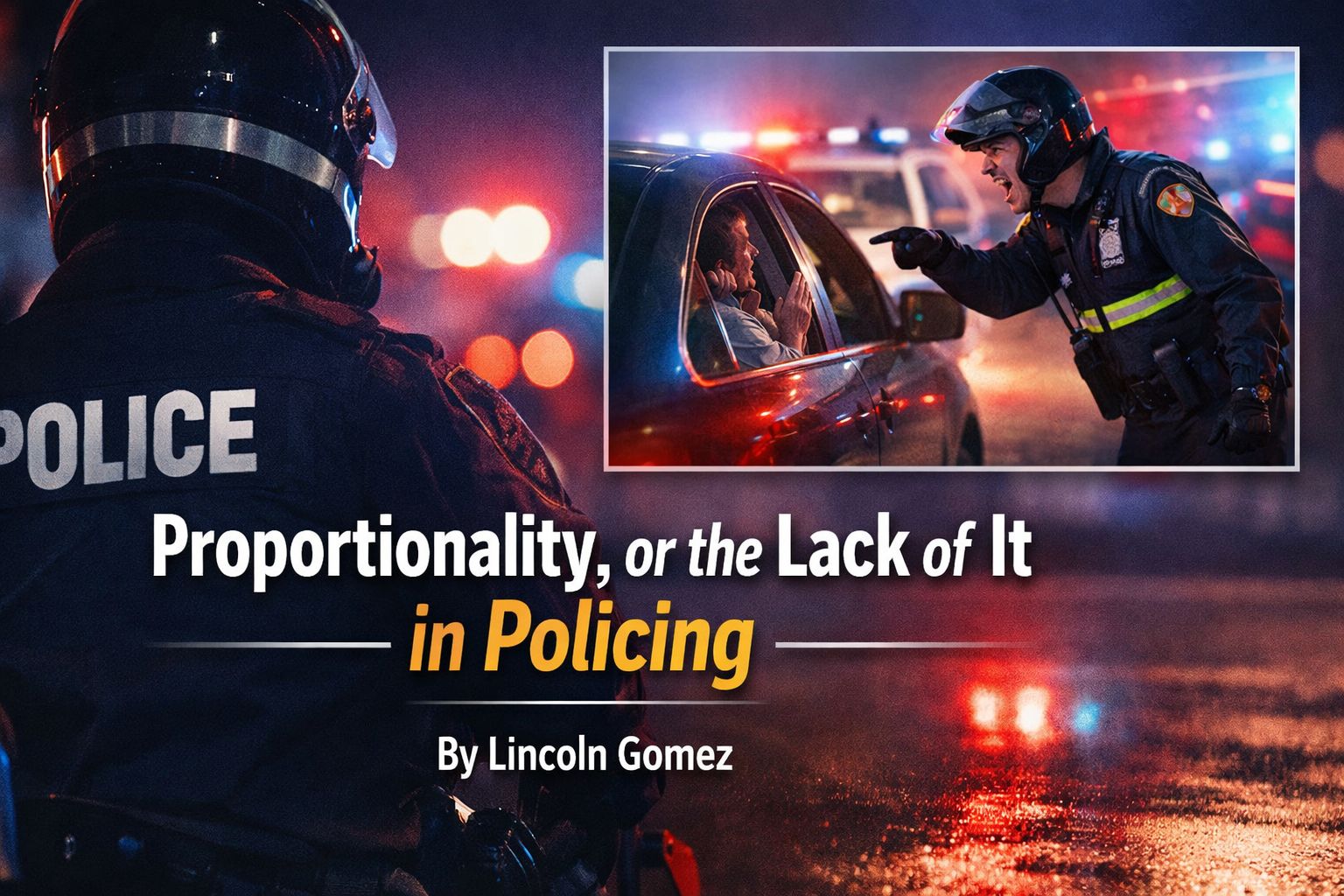
Last Friday afternoon, on my way home on Sasaki Boulevard, there was an accident. Traffic slowed down, people did what they were supposed to do, and the road was cleared. The ambulance got through. A few minutes later, the police motor brigade followed. Again, no issue. Everyone yielded. Everyone complied. I did too. And yet, despite that, I was screamed at by one of the officers on a motorcycle. That is where this stops making sense.
The Reality on the Ground
The facts are simple. The road was already clear. Traffic had already stopped. The emergency response was already moving through without obstruction. There were already multiple police units ahead. Their sirens were on. The urgency was obvious. Everyone in traffic understood it and acted accordingly. There was nothing left to correct. So the question is straightforward: what was the necessity of yelling at me? There wasn’t any.
Necessity and Proportionality
In situations like this, the framework is clear. Emergency vehicles get priority. Road users must yield immediately. That happened. Once that is achieved, the need for further intervention drops off. If there is no obstruction, there is nothing to enforce. The two-laned road was already clear. The urgency was already communicated. Compliance was already there. Yelling at that point is not urgency. It is excess.
Professional Conduct
This is not about whether officers are allowed to be firm. Of course they are. This is about whether there was anything left that required it. There wasn’t. The situation was already under control. The response added nothing to that control. It was unnecessary, and because it was unnecessary, it was disproportionate.
This Is Not an Isolated Point
A few weeks ago, I wrote about a case in which escalation went far beyond what the situation warranted. A broken taillight. A decision to flee. More than twenty shots. A life lost. In that case, the court was clear: the force used was neither necessary nor proportionate. Different situation. Different scale. Same principle. Disproportionate action leading to disproportionate consequences. What happened on Sasaki Boulevard did not have those consequences. But it sits on the same spectrum. Because once you move beyond what is necessary, you are no longer acting within the line.
The Risk That Gets Ignored
Escalating without need introduces risk. You create confusion where there was none. You provoke where there was compliance. And on a public road, that matters. Because you do not control how the other person will react. In this case, nothing happened. But that does not make the action correct. It just means the risk did not materialize.
This Is Not About Me
Let me be clear about one thing. I have a thick skin. A young or experienced police officer yelling at me does not move me. It does not define me. That is not the point. The point is the community. The police are there to protect and serve the community, not to antagonize it, disrespect it, or act in a disproportionate manner toward it. That is why I am sharing this. Not because I cannot handle being yelled at, but because this is about standards, and those standards matter for everyone.
It Reflects on the Whole
And there is another side to this. Over the years, I have come to know many police officers. Some I went to school with. Others I have met throughout my career as a lawyer. There are many professionals within the force who do their jobs properly, understand restraint, and carry the uniform with the respect it deserves. Actions like this unnecessarily put their good name to shame. That is the part that should not be ignored.
Responsibility Within the Ranks
This is also where responsibility sits within the police themselves. Officers should not just expect standards from the public; they should expect them from each other. If a colleague acts out of line, that should be recognized, not ignored. Because maintaining the standard internally is what protects credibility externally.
Keep It Simple
There was compliance. There was clarity. There was no obstruction. So there was no need for escalation.
Closing
This was a small moment. It passed. But proportionality is not tested only in extreme cases. It is tested in moments like this. And when it fails here, it raises a broader question. Not about one officer, but about whether the line is being kept where it should be.
I’ll see you next week. Visit www.lincolngomez.com/blog for more blogs and podcasts.