I Told Him to Stop Building in Private. He Did.
Every serious builder reaches a moment when preparation ends, and proof begins.
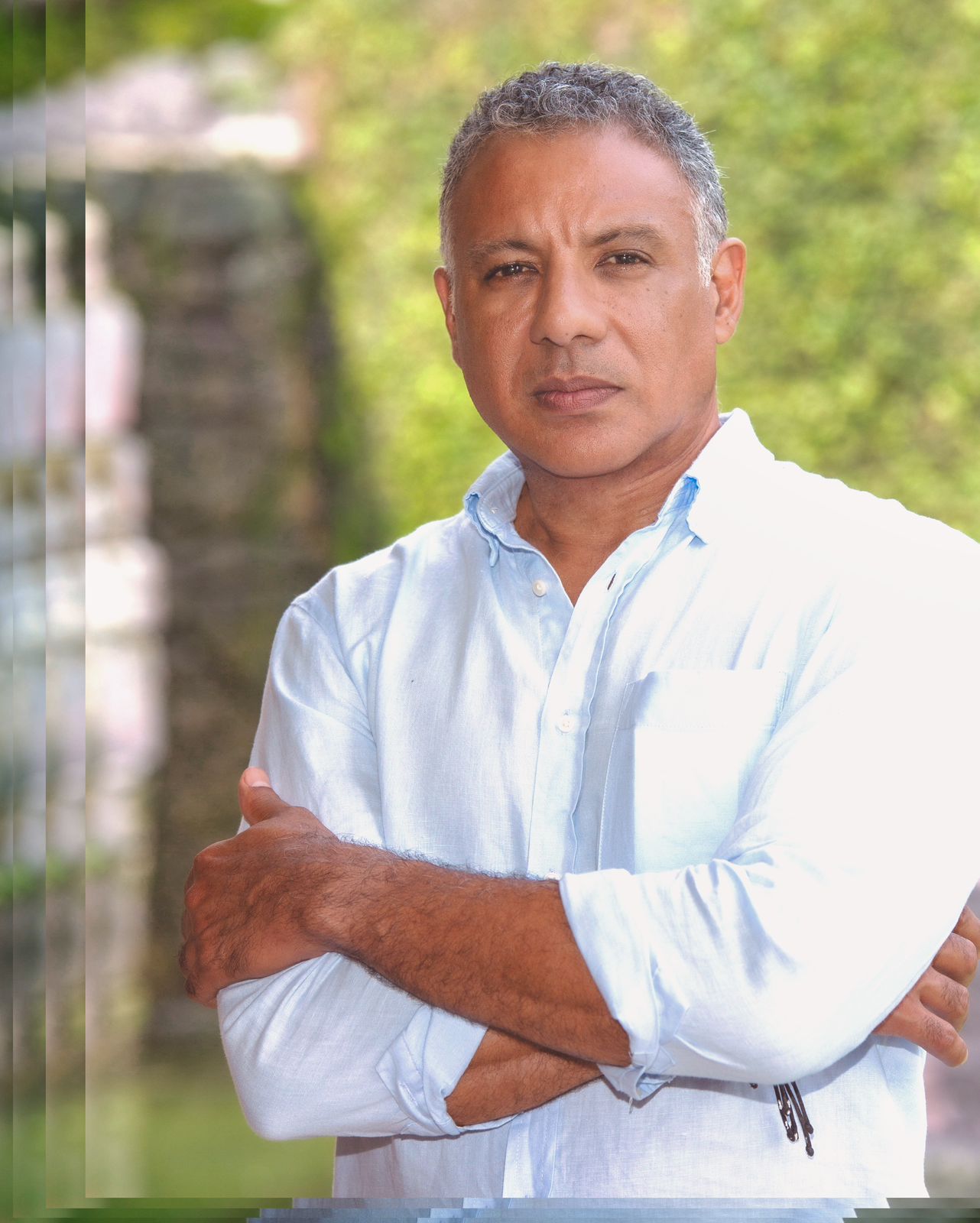
For Riangelo de Cuba and Fluxion, that moment arrived this week, in the form of a global leaderboard and a Top 10 ranking that no one in Aruba saw coming, except me.
What HALLEY Is
Riangelo built HALLEY, short for Hybrid Adaptive Language Logic Engine. It is an artificial intelligence platform designed to do something most AI systems still struggle with: understand documents the way a trained professional does.
Not just read the words. Understand the document. Interpret a blueprint. Extract meaning from a financial report. Answer expert-level questions about a scientific publication or an engineering drawing using visual reasoning. This sits at the center of one of the most competitive areas in AI today: document intelligence.
What HALLEY represents for large language models is a shift away from text generation toward true document intelligence. Most systems today are optimized to process language. HALLEY is built to interpret structure, visuals, and meaning at the level required by professionals. That distinction matters. Because the next phase of AI will not be defined by who can generate the most text, but by who can understand and operate within the complexity of real-world information.
What DocVQA Is
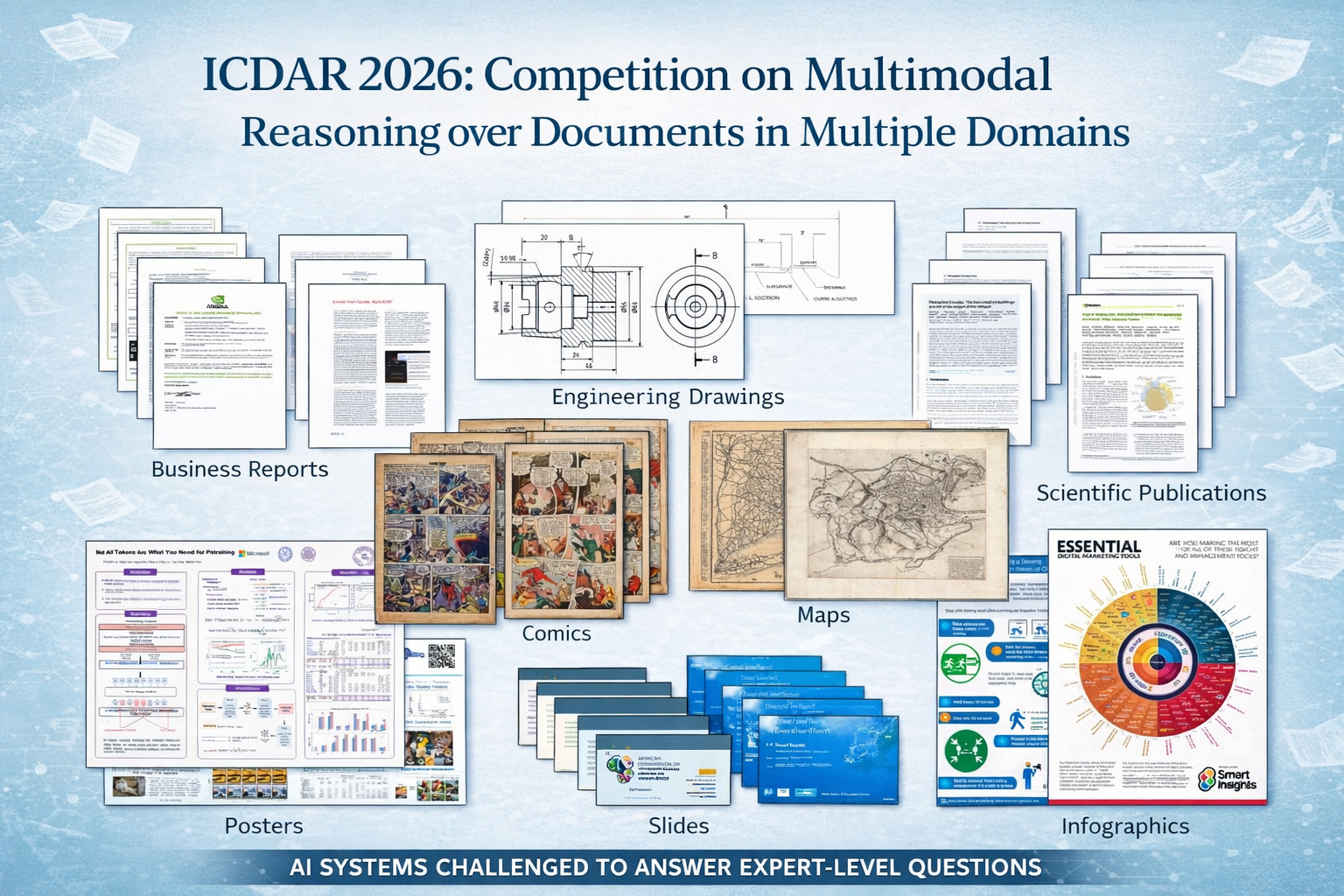
DocVQA 2026 is a global benchmark for document intelligence. Think of it as the world championship for AI systems that must read, interpret, and reason over complex, real-world documents.
The evaluation spans engineering drawings, business reports, scientific publications, comics, maps, infographics, slides, and posters. The questions are expert-level. There are no shortcuts. The leaderboard includes large technology companies, elite research universities, and specialized AI labs backed by hundreds of researchers and, in many cases, billions in funding.
HALLEY placed in the Top 10 globally in the 8B to 35B parameter category.
And it did so without the level of funding, infrastructure, or institutional support available to the teams it competed against.
That matters. Because this was not a case of equal resources producing equal results. This was a case of superior architecture competing above its weight, and winning a position against organizations with structural advantages. It was built commuting between Aruba and Curaçao.
Why I Pushed Him
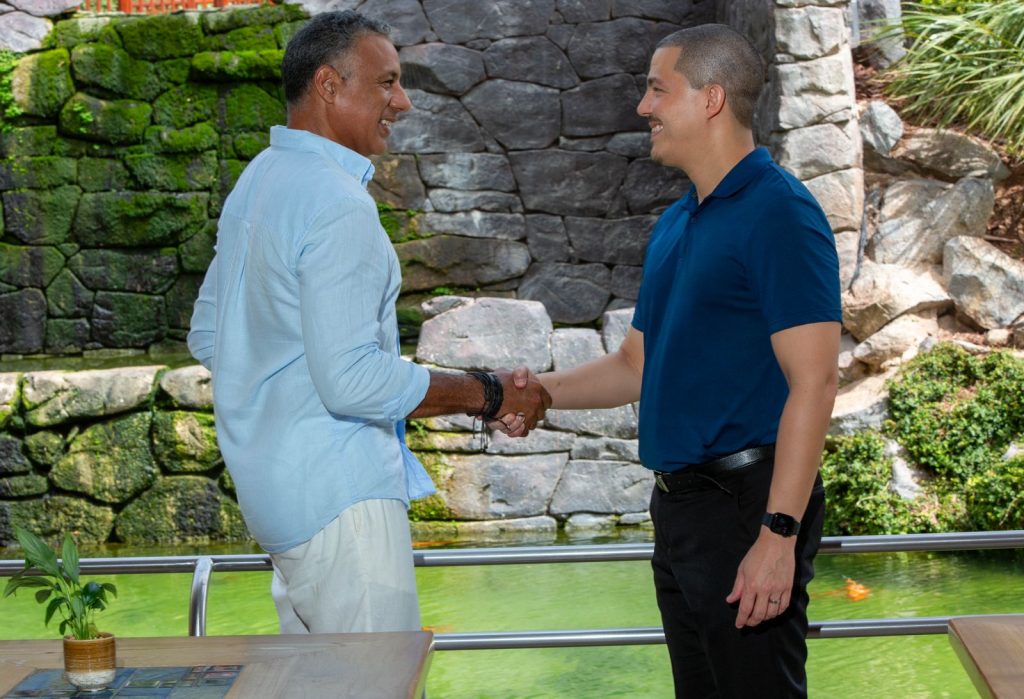
Riangelo had been building HALLEY for years. The architecture was serious. The internal results were serious. What was missing was not capability. It was the decision to compete.
I see this pattern across the Caribbean. We produce people with real technical depth, the kind that would be recognized immediately in San Francisco or Amsterdam. But somewhere between the idea and the global stage, hesitation sets in.
The reasoning sounds rational: it’s not ready, the competition is too established, the timing is off. It isn’t. I told him the timing was right. I told him to submit HALLEY. He did. The world responded.
What This Proves
It proves several things, and each one matters.
First, world-class AI research can be done from the Caribbean. Not in theory. In practice, with a ranked result.
Second, the document intelligence space is not closed. HALLEY competed against organizations with enormous resource advantages and placed alongside them. That is an architectural result, not a marketing one.
Third, and most important for the industry: HALLEY is not a prototype. It is a performing system with a verified position at the frontier of its category.
A Message to the Industry
I am an attorney by training and a strategist by practice. I advise on transactions, structures, and value. So let me be direct. If your organization is investing in document intelligence and you are not paying attention to systems like HALLEY, you are not operating with full information. This is not a regional story. It is a capability story.
What Riangelo has built is exactly the class of asset large technology companies spend years trying to develop internally or acquire at a premium: a specialized, high-performing AI architecture with a verified global ranking, built without the layers that typically slow innovation down.
And yet, because it was built in the Caribbean, many will overlook it.
That is not a geographic bias. That is a strategic mistake. The leaderboard has already done the filtering. It does not care where a system was built. It measures performance.
HALLEY has already cleared that bar. The only question now is who recognizes it early, and who explains later why they didn’t.
What I Believe
I believe the Caribbean is at the beginning of a technology story that has not yet been fully told. HALLEY is one chapter. There will be others. What we need is not more talent. We have that. What we need is the willingness to compete at the level our talent warrants, and the support systems, moral, commercial, and institutional, to sustain that competition.
I am proud of Riangelo. I am proud that something built here now stands among the best in the world. And I intend to keep pushing.
Because this is only the beginning.