“40 Jaar Status Aparte”: A Collective Reflection on Aruba’s Autonomy
Autonomy isn’t a destination — it’s an ongoing act of responsibility, dialogue, and renewal.
In January 2026, Aruba will mark a profound milestone: forty years since achieving Status Aparte. It’s a moment that invites more than celebration — it calls for reflection. What does our autonomous status mean to us as a country? How have we grown within it? What questions are still open, and where might we be headed? These questions are at the heart of a new commemorative project that has recently moved from concept to reality: 40 Jaar Status Aparte: Blik op Verleden, Heden en Toekomst.
50 Jaar Statuut: A Tree, a Conversation, and a Kingdom Dialogue
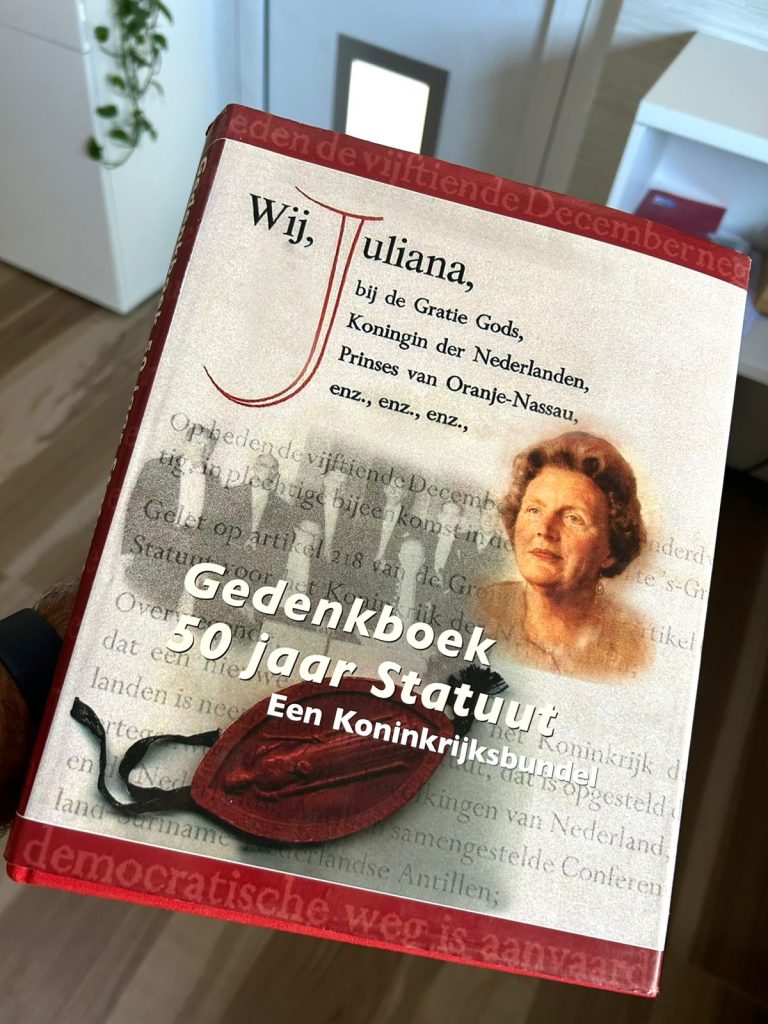
This won’t be my first time helping shape a project like this. In 2004, I had the privilege of working alongside Alice van Romondt, Anneklie van Vliet, Luciano Millard, Jriaan de Haan, Roly Sint Jago, and Andin Bikker as co-editors of Gedenkboek 50 Jaar Statuut – Een Koninkrijksbundel. The Gobik Foundation and several other partners supported the publication. That project, fittingly, began one weekend under a tree in the heart of Oranjestad – a few of us chatting over drinks, sketching out what would become a thoughtful, multidisciplinary volume on the Kingdom Charter. It doesn’t get more Aruban than that. But from that tree, we produced something enduring: a serious, collaborative Kingdom publication that combined legal insight, historical depth, and honest critique.
The Gedenkboek explored the evolution of the Statuut, first signed in 1954 by the Netherlands, Suriname, and the (then) Netherlands Antilles – including Aruba. It offered each of the Kingdom’s regions a formally equal constitutional footing. When Suriname became independent in 1975, and Aruba gained Status Aparte in 1986, the Statuut once again applied to three countries: Aruba, the Netherlands, and the Netherlands Antilles (Curaçao, Bonaire, Sint Maarten, Saba, and Sint Eustatius). The book brought together expert voices from across the Kingdom to reflect on the Statuut’s legal tensions, democratic deficits, and historical turning points – including the Curaçao uprising of 1969 and Aruba’s long journey to autonomy. One key theme that emerged throughout was that the Statuut should never be seen as a fixed endpoint. Instead, it’s a living framework that demands care, courage, and ongoing engagement from all parts of the Kingdom. Autonomy isn’t a destination — it’s an ongoing act of responsibility, dialogue, and renewal.
A Personal Memory: The Night Aruba Was Born
Almost forty years ago, I was there. I had just turned sixteen, standing beside my mother, Jane Helen Frida Lampkin (†), who was there in her role as a journalist. That night, I had to forego the fireworks back home to be part of something she insisted was more important. “You’ll understand it one day,” she told me. We stood in front of the government building and watched the birth of our nation. She covered the story. That moment lives in my memory not just as history, but as something deeply personal – a quiet, proud turning point I’ve carried with me ever since. Perhaps she planted a seed that night. It’s part of why this new project matters so much to me.
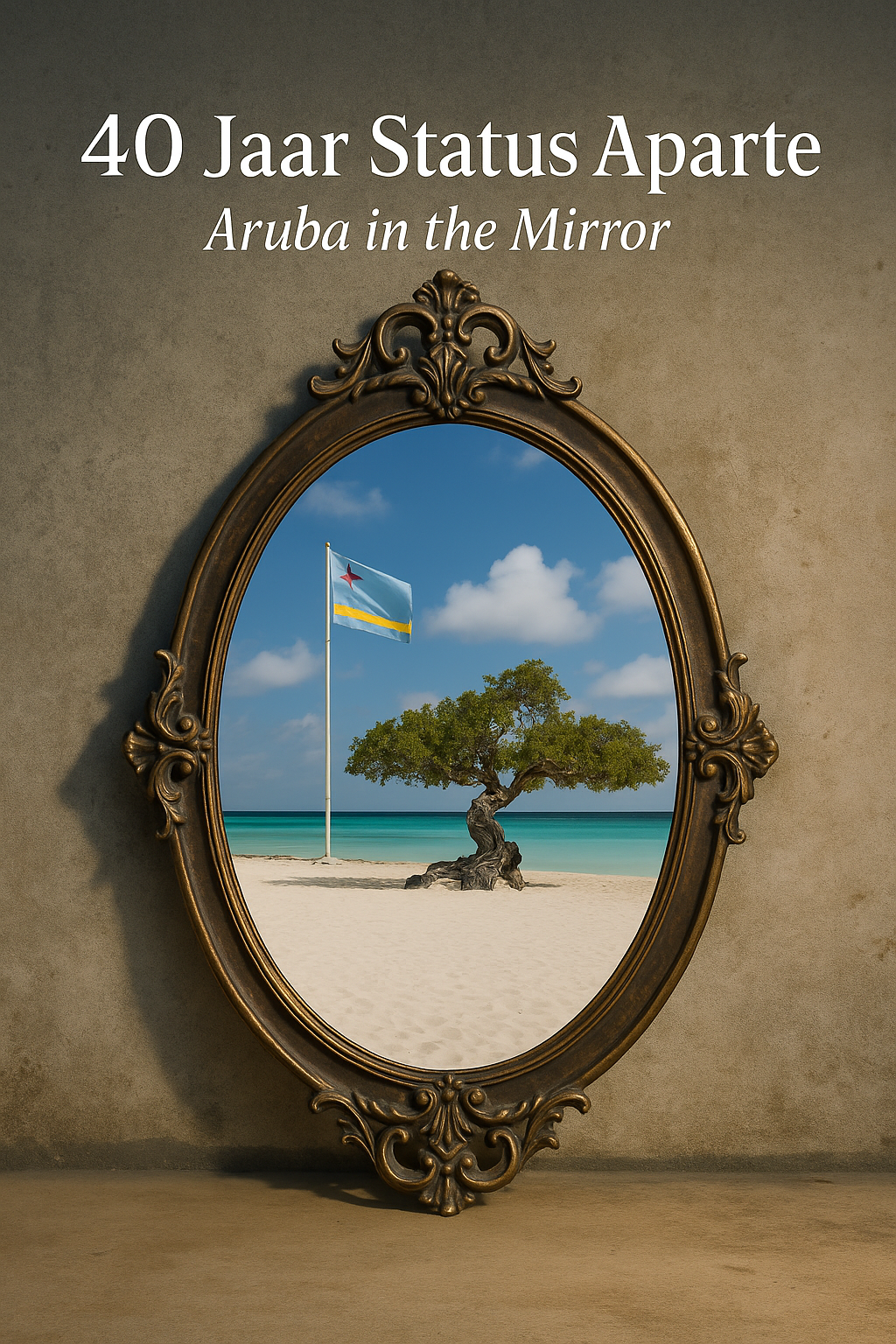
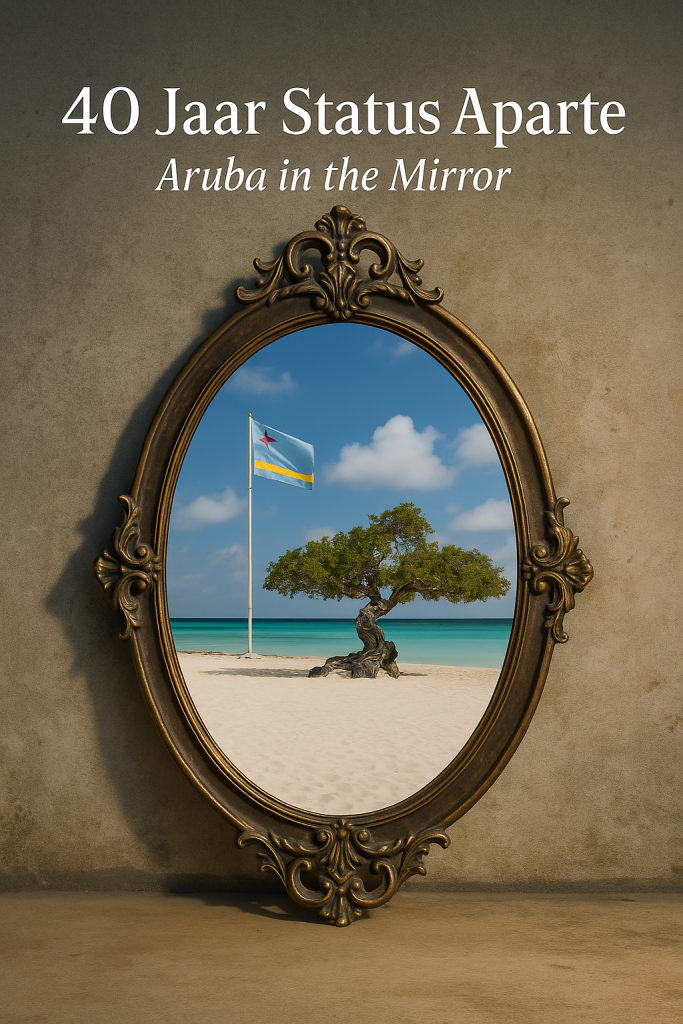
40 Jaar Status Aparte: Aruba in the Mirror
Now, twenty years later, it feels like the right moment to turn the lens inward. The focus this time is not on the Kingdom as a whole, but on Aruba itself. 40 Jaar Status Aparte: Blik op Verleden, Heden en Toekomst will bring together 40 contributions that examine how Aruba’s autonomy has developed, deepened, and at times been tested since 1986. The book will feature legal analysis, cultural insight, political reflection, and personal stories — each offering a different lens on Aruba’s autonomy. The aim is not to offer a single narrative, but to create a multifaceted portrait of Aruba’s experience with self-government – its lessons, limitations, and promise.
Why is this book important? Because Status Aparte was not only a constitutional event – it was, and still is, a statement of intent. It represented Aruba’s desire to take responsibility for its own affairs, to build its own institutions, and to express its identity within the Kingdom in its own way. Over four decades, that aspiration has been tested by economic pressures, governance challenges, and global shifts. Yet the core idea – that we can chart our own course – remains as relevant as ever. A 40-year milestone is not just a time to look back; it is an invitation to take stock and ask how well we are living up to that founding vision.
A Project Born from Enthusiasm and Commitment
What began as an idea – something between a commemorative volume and a platform for public thought – has gained real traction. We’re proud to share that the project has received a clear “GO,” thanks to the remarkable response from confirmed authors. The response so far has been both humbling and energizing — a reminder of how deeply this moment resonates. Many contributors have already begun drafting their chapters, some with titles that hint at deeply personal insights, others shaped by rigorous research and policy experience.
We’ve been especially moved by the diversity of perspectives lining up to participate. The list of contributors includes seasoned academics and young researchers, cultural practitioners and civil servants, legal scholars and community activists. Some are based here in Aruba, while others hail from Curaçao, Bonaire, the Netherlands, Sint Maarten, and further afield. We hope the result will be a rich, polyphonic volume – not a single narrative but a chorus of reflections that together capture the complexity of Aruba’s autonomy.
Welcoming a New Co-Editor: mr. Brechtje Huiskes
We’re also delighted to announce that mr. Brechtje Huiskes of the University of Aruba has joined as co-editor of the project. Brechtje brings legal expertise and a deep commitment to dialogue and academic integrity. Her involvement has already proven invaluable, helping to refine the structure of the volume and broaden its contributor base. Through her network and thoughtful guidance, we’ve welcomed several sharp and insightful voices into the fold – writers whose work bridges theory and practice — and whose perspectives are both critical and constructive. Having Brechtje as a co-editor in this journey has made a real difference, and we’re confident that her editorial judgment and collegial spirit will continue to shape the project for the better.
As anyone who has tried to assemble a multidisciplinary publication knows, the editorial process is part orchestration, part diplomacy. With forty contributors across different disciplines, countries, and languages, it takes thoughtful coordination to ensure everything stays on track. Gathering titles, biographies, and drafts, aligning timelines, and making sure each voice finds its place – it’s demanding work, but also deeply satisfying. What’s been most encouraging is the level of professionalism and commitment from our authors. Everyone understands that this is more than just a writing project – it’s a shared contribution to national reflection, and that shared purpose is keeping the momentum strong.
From Idea to Infrastructure
A commemorative book of this scale doesn’t organize itself. Behind the scenes, a great deal of practical work is already in motion. We’re in the process of collecting working titles, short biographies, and draft contributions. We’ve set deadlines, defined thematic clusters, and begun mapping the structure of the book – which will likely unfold in three broad sections: the past (verleden), the present (heden), and the future (toekomst).
Some are exploring the history of Aruba’s negotiations with the Kingdom. Others are unpacking today’s institutional challenges, such as democratic accountability, economic resilience, or environmental governance. Still others imagine what a “next phase” of autonomy could look like – raising questions about citizenship, migration, sovereignty, and interdependence. While the topics vary widely, they are united by a shared sense of purpose: to use this 40-year mark not only to look back, but to look forward with clarity and courage.
In keeping with the spirit of inclusion and accessibility, contributors are invited to write in any primary languages spoken within the Kingdom of the Netherlands: Dutch, English, Spanish, or Papiamento. This multilingual approach reflects the linguistic richness of our region and ensures that each author can express themselves in the language that best suits their voice, audience, and message.
Although most of our 40 contributor slots are filled, we continue to welcome interest from voices across the Dutch Kingdom, especially those with a fresh perspective or a unique lens on Aruba’s autonomy. If you feel you have something meaningful to add to this conversation, we encourage you to reach out.
This is no longer a loose idea or distant ambition. It’s happening — with real people, real voices, and real momentum. Authors are treating this not just as an academic exercise but as a contribution to national memory and identity. There is real pride – and also a willingness to be honest, to wrestle with uncomfortable truths, and to think beyond the usual binaries.
A Moment of Shared Identity
Why does this matter? Why take the time, as individuals and as a community, to produce a book like this?
Because anniversaries are more than numbers, they are opportunities. They give us a reason to pause, to ask who we are and who we want to be. Status Aparte was never just a legal arrangement. It was – and still is – a statement of aspiration. It is an expression of Aruba’s desire for self-direction, responsibility, and the ability to shape its own destiny within the broader framework of the Kingdom.
That project remains unfinished — and that’s exactly why this publication feels so timely. It gives us a moment to think together: across disciplines, generations, and lived experience. To take stock of where we’ve been, where we are now, and where we still hope to go. And to ask, with honesty and imagination, what a healthy, inclusive, and future-ready autonomy might look like in the decades ahead.
Looking Ahead to January 2026
As we work toward publication, we want to express our gratitude to everyone already involved – the authors, advisors, editors, and supporters who are making this vision a reality. Your insights, labor, and trust will bring this book to life.
To our wider community, we hope you’ll follow along. In the coming months, we’ll share updates and previews as the project takes shape. We believe this book will belong not just to the people writing it but to all of Aruba – to anyone who cares about our story and our future.
So, let us mark the anniversary not only with ceremony, but with reflection. Let us read, listen, and learn from one another. And when January 2026 arrives, let’s hold this book in our hands and recognize it for what it is: a collective mirror, a national conversation, and a shared step forward.
Thank you to all who have committed their time, energy, and ideas to this project. We’re proud to be on this journey together and look forward to sharing the final result with you.
See you next week — and don’t forget to visit www.lincolngomez.com, where you’ll find all my blogs and podcasts (and no deadline reminders, I promise).